search
  • YouTube
  • Fr
  • En
Menu
Accueil Accueil

Navigation principale

  • Home
  • About CNRS PhysicsMissions, values, organization
    • What is CNRS Physics ?
    • Organization chart
  • ResearchThemes, structures and laboratories
    • Research topics
    • Research Networks
  • StrategyProspects, Innovation, International
    • Physics Toward 2030
    • Innovation
    • Internationally
  • ActionsSupport, Assistance
    • Emergence and Tremplin Calls for Projects
    • Gender parity and professional equality
    • Environmental transition
    • Support
    • Mentoring
  • TalentsAwards and Distinctions

Navigation secondaire

  • News
  • Agenda
  • Calls for applications
  • Library
  • Directories
  • Intranet
Donate
  • Fr
  • En
CNRS Header Ontheweb

Breadcrumb

  1. Home
  2. Search

Search

Recently

10.04.2026
Call for application

Appel à projets Émergence 2026

CNRS Physics intends to continue supporting the development of research projects by staff members in the units under its purview. The institute is renewing its “Émergence” call for proposals in 2026…
10.04.2026
Call for application

Appel à projets Tremplin 2026

CNRS Physique wishes to continue supporting the development of research projects by staff members in the units under its purview. It is renewing its “Tremplin” call for proposals. This is a specific…
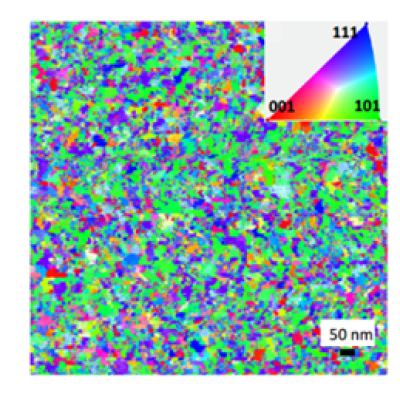
Figure : Nanoscale analysis using atomic force microscopy of two regions of the material with different properties: coercivity indicates the material's resistance to loss of magnetisation.
Date du contenu
11.03.2026
News

If you want to optimise your magnet, look below the micron scale...

Researchers used correlative microscopy techniques coupled with numerical simulations to show that the optimality of a permanent magnet is determined at the nanometric scale, within each grain of the…
Figure: above: the trimodal velocity distribution from the experiment. The large peak in the middle represents the Bose-Einstein condensate, and on either side, carrying opposite velocities, are the phonons created by parametric excitation. Below are the individual phonons (blurred spheres) and a diagram representing their entanglement.
Date du contenu
02.03.2026
News

Simulation of the early universe in a Bose-Einstein condensate

By periodically disturbing a cold gas of helium atoms with a laser, physicists have succeeded in creating excitations from the quantum vacuum, using a process similar to the creation of matter in…
Home

Nous suivre

  • YouTube
All our social networks
Ours labels
  • Accédez aux ERC de CNRS Physique

Pied de page secondaire

  • Copyrights
  • Legal Notice
  • Gestion des cookies
  • Personal data

Naviguer

  • INP
  • Research
  • Talents
  • News
  • Agenda
  • Calls for applications
  • Library
  • Directories
  • Intranet
  • Documentation