Émergence et Tremplin calls for project
CNRS Physics supports research teams in its laboratories by backing the development of their research projects through two specific calls for projects: Émergence and Tremplin.
In line with its strategy, CNRS Physics supports and assists the laboratories affiliated with it. CNRS Physics plays an essential role in supporting and assisting research through grants to laboratories, funding for infrastructure and communities organised into federations or research groups, calls for projects, international initiatives, the pre-maturation programme, the management of joint laboratories with industry, and staff recruitment.
CNRS Physics continues to build on its past commitments while affirming a renewed ambition: to advance research on all fronts of physics, stimulate collaboration between disciplines, and support the digital, technological, and environmental transitions that are redefining our societies. With a constant focus on gender equality, diversity and the dissemination of scientific culture, the institute reaffirms its commitment to building open, responsible and sustainable science.
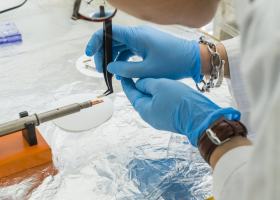


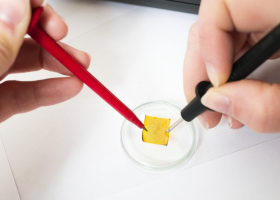
CNRS Physics supports research teams in its laboratories by backing the development of their research projects through two specific calls for projects: Émergence and Tremplin.
The deadline for submitting applications is April 10, 2026.
In order to support the development of research projects by individuals from units under the primary responsibility of CNRS Physics, the Emergence@Physique call is renewed each year.
Its purpose is to help researchers who were recruited three to five years ago to develop a new project in which they will be the main drivers. This call is open to CRCN (Chargés de Recherche CNRS) or MCF (Maîtres de Conférences), or equivalent, working in units primarily under CNRS Physique, and to CRCNs from sections 02, 03, 04, and 05 assigned to units under CNRS Physics' secondary responsibility.
Three types of support are available:
YEAR | 2022 | 2023 | 2024 | 2025 |
SUCCES RATE | 72% | 80% | 67% | 92% |
To further strengthen its disciplinary themes, CNRS Physics has renewed the Tremplin@Physique call for projects each year.
This funding aims to help overcome scientific and/or technological obstacles, enabling researchers to obtain substantial follow-up funding in the short term from a variety of sources (ERC, Horizon Europe, ANR, etc.).
A maximum of €25,000 per project may be granted. This budget may be used to finance equipment, operational costs, and travel to establish collaborations with other French or international research laboratories.
YEAR | 2022 | 2023 | 2024 | 2025 |
SUCCES RATE | 66% | 65% | 61% | 62% |
| Number of funded projects | 23 | 33 | 38 | 51 |
CNRS Physics is taking action to foster gender parity and equality on a daily basis in laboratories and to encourage young women to pursue careers in the field of physics. CNRS Physics has made this topic a priority by establishing a gender parity and equality team responsible for monitoring and implementing relevant measures. The work of our female researchers, lecturer-researchers, PhD students, engineers, and technicians is highlighted, along with best practices from CNRS Physics laboratories and the CNRS in this field. An annual training course has also been created to support women in their career paths within CNRS Physics laboratories.
The gender equality policy of CNRS Physics is part of the broader parity policy framework of CNRS. In this context, the institute has implemented a plan to improve gender parity and equality in its laboratories, with two main objectives:
The CNRS Physics gender parity and equality policy was developed based on the following observations:
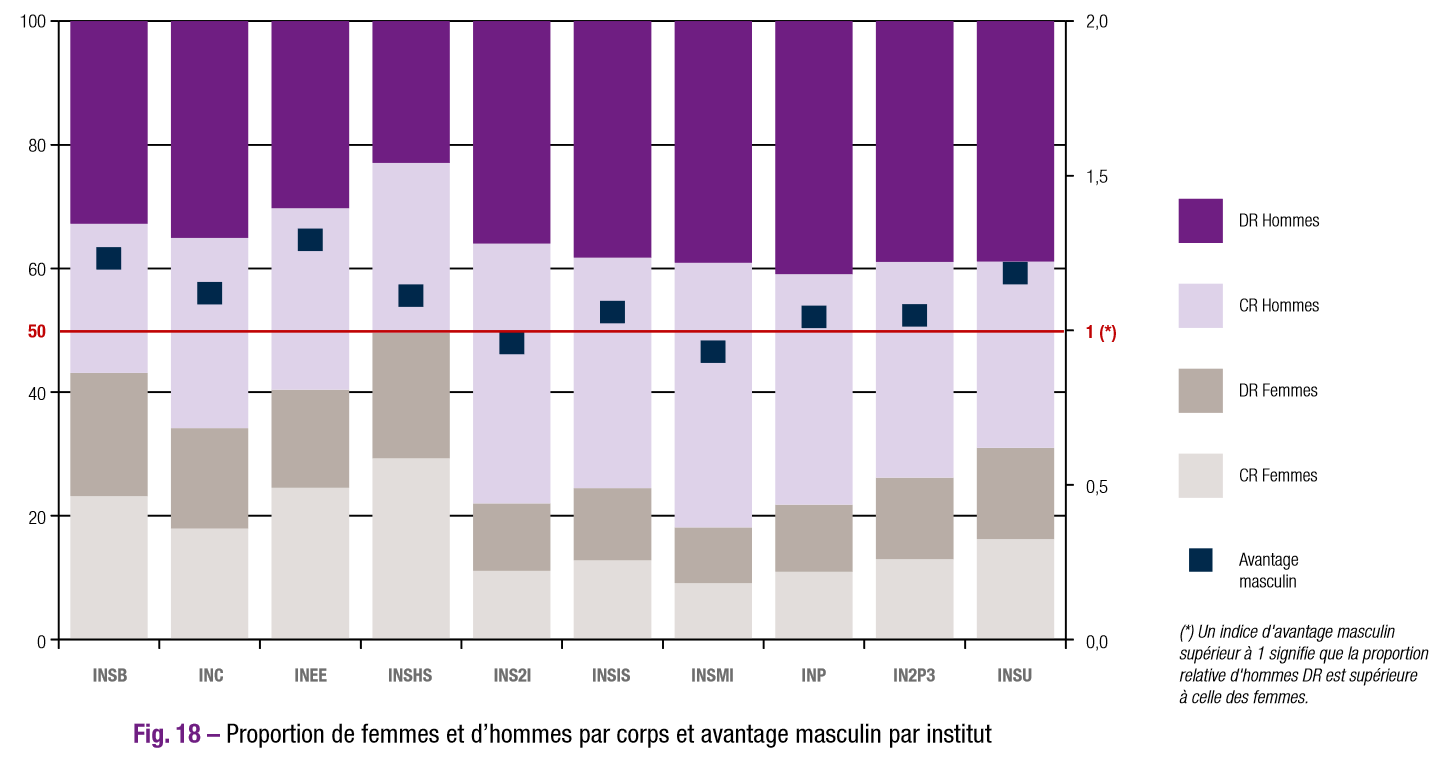
The CNRS Physics policy to improve gender parity and equality in its laboratories is structured around three main pillars:
In collaboration with the Île-de-France Shared Training Service (IFSeM), CNRS Physics offers a specific training program titled “Women in Physical Sciences: Enhancing Skills, Building Confidence, and Sharing Experiences.” This is aimed at researchers, engineers, technicians, and administrative staff, providing tools to help them thrive professionally within CNRS Physics laboratories.
Co-leads : Bertrand Georgeot, Marie-Pierre Valignat
Members : Nina Bouchelaghem, Marta de Frutos, Séverine Martrenchard, Franck Menounga, Margaux Monvoisin, Lauren Puma
Contact us : inp-celluleparite@cnrs.fr
Find out more on MDPF's website
A practical information sheet on the rights of young parents working as researchers can be found on the EFIGIES website.
Find out about actions to prevent harassment - Mission pour la Place Des Femmes au CNRS (Mission for the Place of Women at the CNRS).
On February 26, 2019, the CNRS signed the Agreement on Commitment to gender stereotype-free communication, from the High Council for Equality between Women and Men (Convention d’engagement pour une communication sans stéréotype de sexe, du Haut conseil pour l’égalité entre les femmes et les hommes). The CNRS and its bodies will formulate recommendations and proposals to ensure stereotype-free communication.
Read the Guide to stereotype-free communication.
Read the "Women in physics" news from CNRS Physique.
CNRS Physics is part of the CNRS strategy for environmental transition as defined in its Sustainable Development and Social Responsibility Master Plan. CNRS Physics leads and coordinates the deployment of this approach within CNRS Physics laboratories.
CNRS seeks to mobilise its research strengths across all fields by contributing to the collective effort toward a sustainable society and a habitable planet. Through its research and innovations, it takes part in a global dynamic structured around the Sustainable Development Goals (SDGs) defined by the United Nations (UN).


CNRS Physics is committed to developing research in physics to address the challenges of environmental transition. A dedicated unit ensures the implementation and monitoring of measures. To facilitate exchanges with physics laboratories on this topic, a network of designated representatives has been deployed within the units affiliated with CNRS Physics.

The institute acts to reduce the environmental impact of physics research by implementing the CNRS low-carbon transition plan at the scale of physics laboratories. It works to measure and reduce the environmental impact of research activities and research support in physics. CNRS Physics promotes initiatives to reduce environmental impact within its affiliated units and raises awareness among their staff.

Physics research fully contributes to the environmental transition by generating new knowledge. Through their work, physicists contribute to discoveries and innovations that address major contemporary societal challenges.
Personalized support is a system designed for researchers at CNRS Physics. It aims to address a professional issue identified either by the individual or by a third party. It is essential that the person concerned is willing to participate in this support. The reason for and content of the sessions are strictly confidential, and anonymity is fully guaranteed.
This support system complements, but does not replace, other existing forms of support such as training, mentoring, or human resources actions. It also does not substitute systems dedicated to addressing psychosocial risks and conflict situations (support hotlines, incident reporting, mediation, etc.).
Note: This service is limited to CNRS researchers, as separate support systems for research support staff are managed at the regional delegation level.
CNRS Physics places particular importance on the quality of the onboarding process and career support for new staff, especially in the beginning stages, to ensure successful integration and personal development within the workplace community.
Recognizing the diversity of research careers and roles, CNRS Physics is implementing a nationally coordinated mentoring program. Initially, this initiative is available to research fellows who have been appointed for approximately less than five years in its laboratories, as a complement to any local programs.
The CNRS Physics’ mentoring program state of mind
Mentoring is a relationship in which one person (the mentor) supports and advises a colleague (the mentee), sharing their professional experience and personal insights from similar situations. It is not mandatory or systematic and may involve any early-career researcher.
Le mentorat se distingue du suivi scientifique par la section après le recrutement. Il se distingue aussi des outils mis en place par les laboratoires et les délégations régionales pour l'accueil des entrantes et entrants.
Objectives
Mentoring can address various aspects of professional life, including career development, time management, work-life balance, managing workplace relationships, visibility in the lab or internationally, responding to calls for proposals, etc.
Guidelines
Mentoring is initiated by the mentee and is based on mutual willingness. Although it involves a difference in experience, it does not establish a hierarchical relationship. It is a professional relationship grounded in listening, respect, and trust, with a shared commitment to confidentiality.
Implementation of Mentoring at CNRS Physics
Coordination Committee
A coordination committee composed of individuals from CNRS Physics and its Scientific Steering Committee (CSI) oversees the mentoring activities, including matching mentors and mentees.
At the national level, CNRS Physics has created a pool of experienced professionals who have volunteered to serve as mentors. Each mentoring pair is linked to a reference person from the coordination committee, who can offer additional support throughout the mentoring process.
Forming Mentoring Pairs
Anyone interested in participating in the mentoring program should send a brief request explaining their motivation to the coordination committee at: INP-mentorat@cnrs.fr.
A committee member will then contact the individual to clarify goals and expectations and to propose a suitable mentor. Following this exchange, the mentor and mentee will meet for a first session to discuss the objectives and structure of their mentoring relationship. If both parties agree on the goals and terms of the mentoring process, the mentor-mentee pair is officially established upon signing the Mentoring Charter.