The CNRS Physics Research Networks (GDR)
The Research Networks (GDR) bring together and mobilize research teams from various disciplines, from different CNRS institutes, as well as academic or industrial stakeholders, around original or emerging scientific themes. This page lists the GDRs led by CNRS Physics and outlines their research areas.
A CNRS Research Networks (GDR) connects and unites a scientific community around an emerging, original theme. CNRS Physics initiates GDRs focused on scientific topics that address current fundamental or societal issues. These topics may fall within the core business but can also involve interfaces between physics and other scientific fields. In this respect, transdisciplinary GDR led by CNRS Physics are supported in collaboration with other relevant CNRS institutes.
The main missions of a GDR are to foster a thematic, often multidisciplinary, community; to encourage free access to new partners; to promote collaboration and exchange among scientists within the network of participating laboratories; and to establish scientific projects at national, European, or international levels. Expanding GDR communities to include industrial stakeholders—for instance, through the creation of a "partners' club"—enables mutual enrichment and the identification of shared research topics.
This page presents, in the form of summary sheets, the objectives of each Research Network led CNRS Physics. Beyond describing their research focuses, each summary offers the opportunity for new partners—possibly from other disciplinary fields or non-academic sectors—to contact the GDR and join their mailing lists.
2D+ | 2D Horizon and Heterostructures
The Horizon 2D and Heterostructures (2D+) research network is a horizontal research network that aims to bring together the French community working on two-dimensional materials and associated low-dimensional systems (van der Waals heterostructures, moiré patterns, twisted systems, nanotubes, 2D–1D and 1D–0D hybrids, etc.). Research topics cover synthesis, characterisation, theory and devices, addressing both fundamental properties and emerging functionalities. In a highly competitive international context, the GDR 2D+ promotes scientific exchange, interdisciplinarity, collaboration and visibility at national and international levels.
COORDINATION
- Coordinatrice : Antoine RESERBAT-PLANTEY (CRHEA)
- Coordinateur(s)/Coordinatrice(s) adjoint(es) : Johann CORAUX (NEEL), Maria Luisa DELLA ROCCA (MPQ), Fabien VIALLA (ILM)
THÉMATIQUES
- Optics: Light–matter interactions and advanced spectroscopies in 2D materials and their heterostructures, from excitonics to optoelectronic and photonic devices
- Electronics: Electronic and physical transport of devices in 2D and hybrid systems, from flat bands and correlated phenomena to ultra-fast components and reconfigurable architectures
- Spintronics: 2D magnetic materials and degrees of freedom (spin, valley and spin-orbit) for the control, detection and exploitation of magnetic and topological properties
COMMUNAUTÉ
- 400 researchers involved
- Within 80 laboratories
ADN-Phys | Dynamic architecture and physics of the nucleus
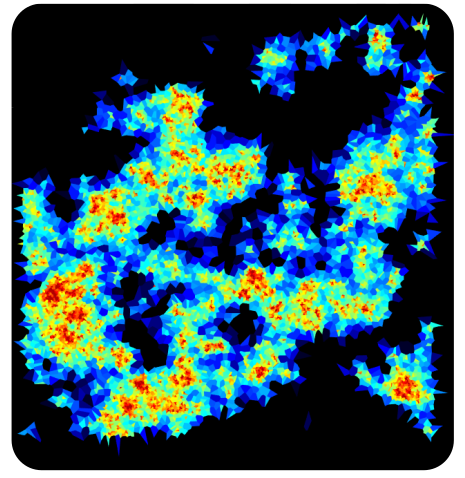
The mission of the Dynamic architecture and physics of the nucleus (ADN-Phys) research network is to bring together the French community involved in the study of nuclear organisation and interested in physical modelling. At the interface between physics and biology, the ADN-Phys GDR aims to understand the functional role of nuclear organisation in physiological processes and associated pathologies by promoting the emergence of an integrated approach to chromosome architecture and dynamics at different scales of size and time.
COORDINATION
- Coordinator : Daniel JOST (LBMC)
- Deputy Coordinators : Emmanuelle FABRE (GenCellDis) and Jean-Charles WALTER (L2C)
RESEACH TOPICS
- Physical modelling of biological systems/living matter
- Statistical physics and polymer physics
- Active matter
- Numerical simulation
- Experimental techniques in molecular and cellular biology
- Super-resolution microscopy, cryo-electron microscopy
- Chromosome configuration capture (3C and its derivatives)
- High-throughput sequencing approaches (single cells)
- Bioinformatics/biostatistics
- 3D visualisation and animation techniques
- Artificial intelligence
COMMUNITY
- 250 researchers involved
- Within 69 teams among 47 laboratories
AQV | Quantitative Approaches to Life Sciences
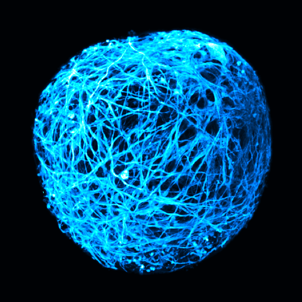
The Quantitative Approaches to Life Sciences (AQV) research network was created to consolidate and promote links between communities at the interface between biology and physics. The creation of the AQV GDR was based on two observations: (1) today, a better understanding of living organisms requires quantifying and modelling them and taking into account the laws of physics and chemistry, (2) this approach can only be implemented in an interdisciplinary framework. Beyond importing tools and concepts, it also involves addressing key questions in biology through approaches that combine biology and physics. These advances enable the development of new physical concepts (examples: active matter, physics far from equilibrium, noise robustness, learning in frustrated systems, dynamics of very high-dimensional systems).
COORDINATION
- Coordinateur : Fabien MONTEL (LPENSL)
- Coordinateur adjoint : Cécile LEDUC (IJM), Renaud POINCLOUX (IPBS)
THÉMATIQUES
- Energy conversion
- Information processing
- Phase transition and emergence
- Evolution, adaptation and learning
COMMUNAUTÉ
- 400 researchers involved
- within 94 laboratories
BioComp | Hardware implementations of natural calculation
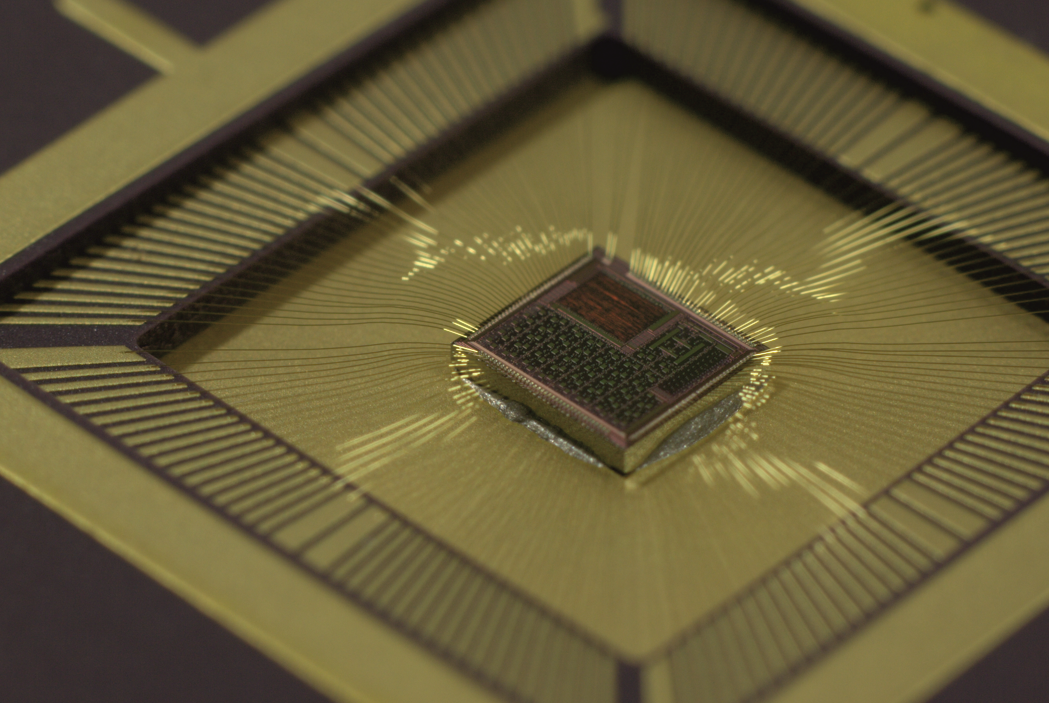
The mission of the Hardware implementations of natural calculation (BioComp) research network is to bring
together and structure the French community working on the realisation of bio-inspired hardware systems. BioComp
aims both to understand the mechanisms at work in biological systems in order to create new types of chips based on
natural computation, and to build hybrid hardware architectures in order to better understand biology.
COORDINATION
- Coordinatrice : Elena-Ioana VATAJELU (TIMA)
- Coordinateur adjoint : Marwen BELKAID (ETIS)
THÉMATIQUES
- Neuromorphic systems
- Artificial Intelligence
- Bio-inspired computation, cognitive neurosciences and cognitive psychology
- Biologically inspired information processing
- Materials, physics and electronics for bio and neuroinspired computation
- Neuro-inspired robotics
COMMUNAUTÉ
- 273 researchers involved
- Within 49 laboratories
CHALCO | Chalcogenide materials: research, development and innovation
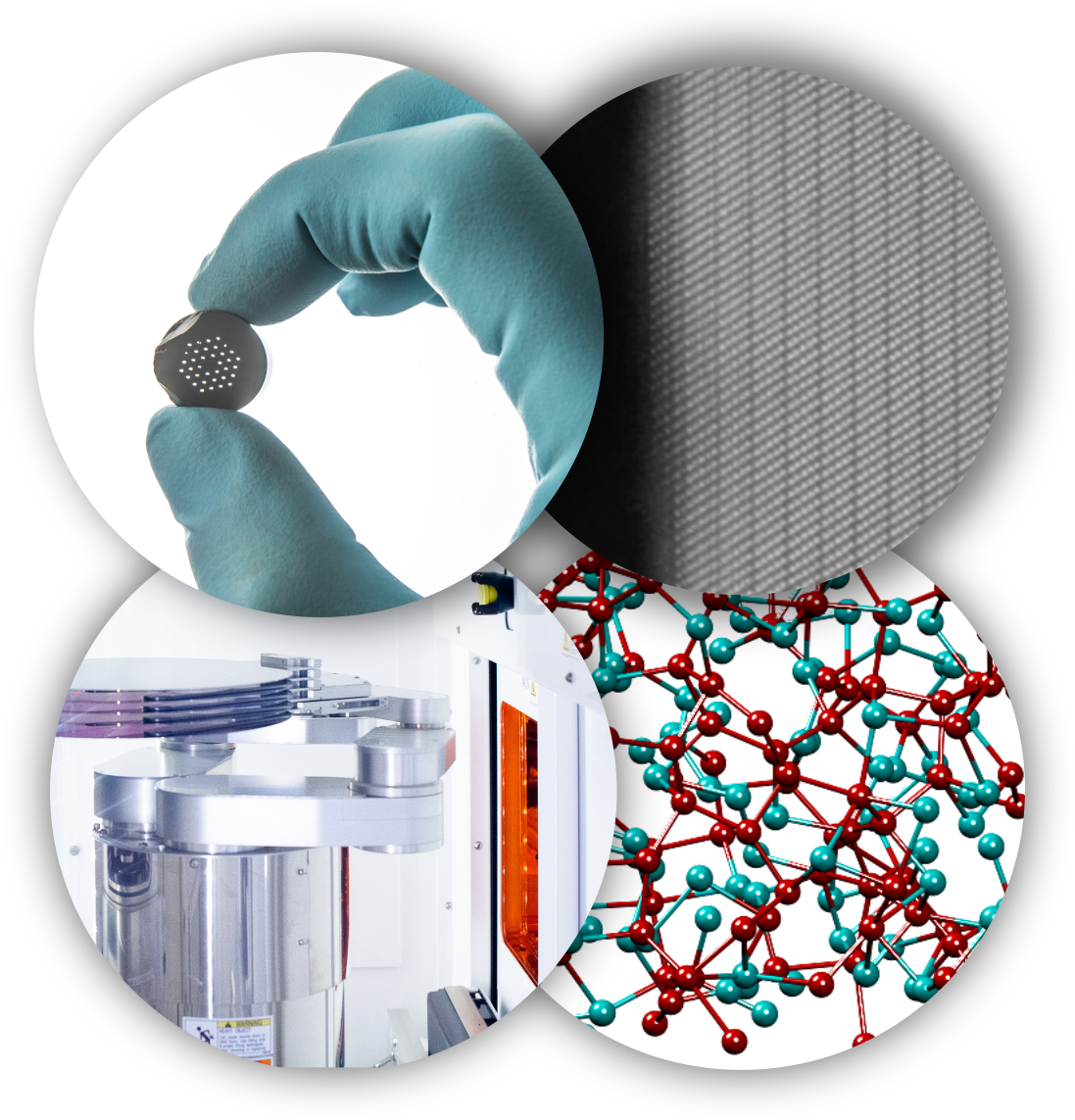
The mission of the Chalcogenide materials: research, development and innovation (CHALCO) research network is to bring together the french community working at the forefront of science/technology around chalcogenide materials in a large variety of multidisciplinary fields. The CHALCO research group aims at structuring this community, on the french national level, to empower the different players to collaborate and interact beyond their own native field. This will be made possible by a vertical netting from fundamental research to industrial applications, and a transverse netting in the 4 identified fields: memories/neuromorphic, optical/photonic, thermal/energetic and spin-orbitronics. Linking all the knowledge/research operators from the fundamental research up to the industrial production will enable the emergence of new synergies in all the deep tech fields where chalcogenide materials are involved.
COORDINATION
- Coordinateur : Jérôme GAUDIN (CELIA)
- Coordinateur(s)/Coordinatrice(s) adjoint(es) :Andrea PIARRISTEGUY (ICGM), Virginie NAZABAL (ISCR), Benoît CLUZEL (ICB), Pierre NOÉ (LETI) et Francoise HIPPER (LMGP)
THÉMATIQUES
- Memories and neuromorphic applications
- Optical and photonic applications
- Thermal and energy applications
- Spin-orbitronic applications
- Theory, design and modeling
- Production of materials
- Advanced characterisations
COMMUNAUTÉ
- 274 researchers involved
- within 37 laboratories
COHEREX | Science with coherent X-rays at 3rd and 4th generation synchrotron sources
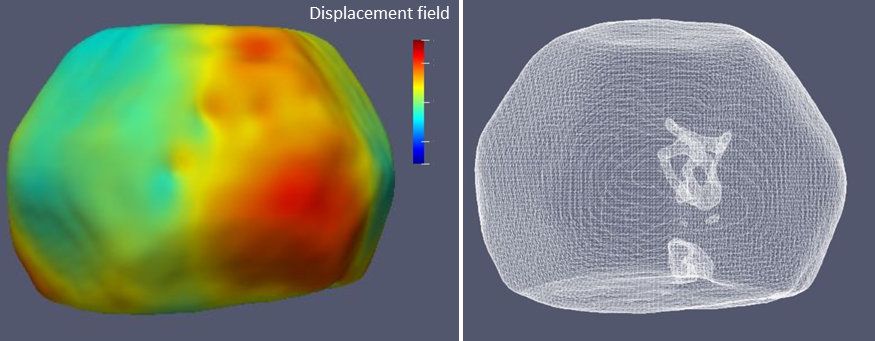
The assignment of the Science with coherent X-rays at 3rd and 4th generation synchrotron sources (CohereX) research network is to gather the French community using coherent X-ray techniques for their research that spans from biological systems over cultural heritage materials and functional materials to the electronic and magnetic structure and dynamics of matter. CohereX aims to share the know-how and to foster the development of novel innovative studies and data analysis approaches, in particular, with respect to the unique opportunities offered at upgraded extremely brilliant synchrotron sources.
*La science avec les rayons X cohérents dans les sources synchrotron de 3ème et 4ème génération
COORDINATION
- Coordinateur : Thomas WALTER CORNELIUS (IM2NP)
- Coordinateur(s)/Coordinatrice(s) adjoint(es) : Béatrice RUTA (ILM) et Julio CESAR DA SILVA (NEEL)
THÉMATIQUES
- Functional materials (ferroelectrics, magnetic materials, batteries...)
- Cultural heritage materials
- Biological systems
- Biominerals and biomimetic materials
- Dynamical fluctuations in complex materials
- High-energy coherent X-rays
- Big data and data management
- Machine learning for data treatment
COMMUNAUTÉ
- 120 researchers involved
- within 28 laboratories
COMPLEXE | Wave control in complex media
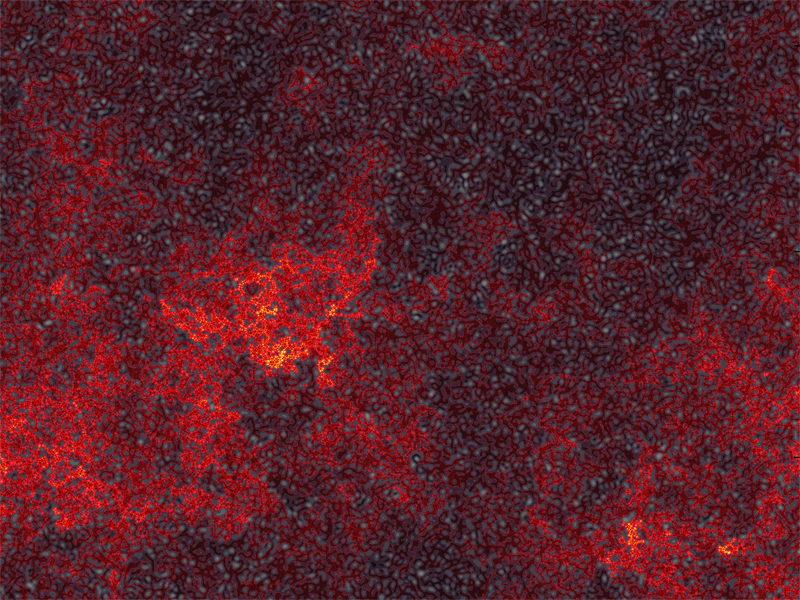
Crédit : D. Delande, LKB (2016) (auteur et propriétaire)
The mission of the research network Control of waves in complex media (COMPLEXE) is to gather the French community involved in both fundamental and applied research in the field of the physics of waves in complex media. COMPLEXE aims to foster exchanges between opticians, acousticians, cold-atom physicists and seismologists, and focuses on fundamental aspects of the propagation of waves as well as on the development of novel methods for control and imaging of waves within complex media.
COORDINATION
- Coordinateur : Nicolas CHERRORET (LKB)
- Coordinateur adjoint : Alexandre AUBRY (Institut Langevin)
THÉMATIQUES
- Methods of control, imaging and characterization of waves in complex media
- Fundamental research on the mesoscopic aspects and the localization of waves in disordered media
- Wave transport in correlated or nonlinear media
- Waves as simulators of quantum or topological systems
COMMUNAUTÉ
- 178 researchers involved
- within 39 laboratories
ELIOS | Non-linear effects in optical fibers and in integrated optics
The mission of Nonlinear effects in optical fibers and in integrated optics (ELIOS) research network is to bring together the French academic community working on nonlinear effects in waveguides in the broad sense, and to stimulate relations with French manufacturers.
COORDINATION
- Coordinateur : Arnaud MUSSOT (PhLAM)
- Coordinateur(s)/Coordinatrice(s) adjoint(es) : Hervé RIGNEAULT (Institut Fresnel), Christophe FINOT (ICB), Delphine MARRIS-MORINI (C2N)
THÉMATIQUES
- Optical fibers
- Integrated optics
- Nonlinear effets
- Solitons, modulation instability
- Rogue waves supercontinuum
- Parametric processes, Raman and Brillouin processes
- Telecommunications
- Fiber amplifiers and lasers
- Short pulses
- Complex dynamics monitoring
- Biophotonic applications
COMMUNAUTÉ
- 311 researchers involved
- within 35 laboratories
EMIE | Isolated and interacting molecular assemblies
The mission of Isolated and interacting molecular assemblies (EMIE) research network is to bring together the French community of physicists and chemists working on molecular systems, and covering a wide range of size and complexity. The objects under scrutiny are either isolated in the gas phase or surrounded by a controlled environment. Building upon fundamental aspects of experimental and theoretical molecular physics, our community is naturally inclined to benefit from interactions with other disciplines (chemistry, biology) and to extend its fields of applications to other scientific domains with timely societal impacts (biology, atmosphere).
COORDINATION
- Coordinateur : Pierre ÇARÇABAL (ISMO)
- Coordinatrices adjointes : Luke MACALEESE (ILM), Ha TRAN (LMD)
THÉMATIQUES
- Experimental methods and instrumentation
- Theoretical approaches
- Atmospheric and Universe sciences
- Excited states and energy
- Biomolecules
- Environment effects
COMMUNAUTÉ
- 671 researchers involved
- within 52 laboratories
GQ=(QG)† | Quantum gases
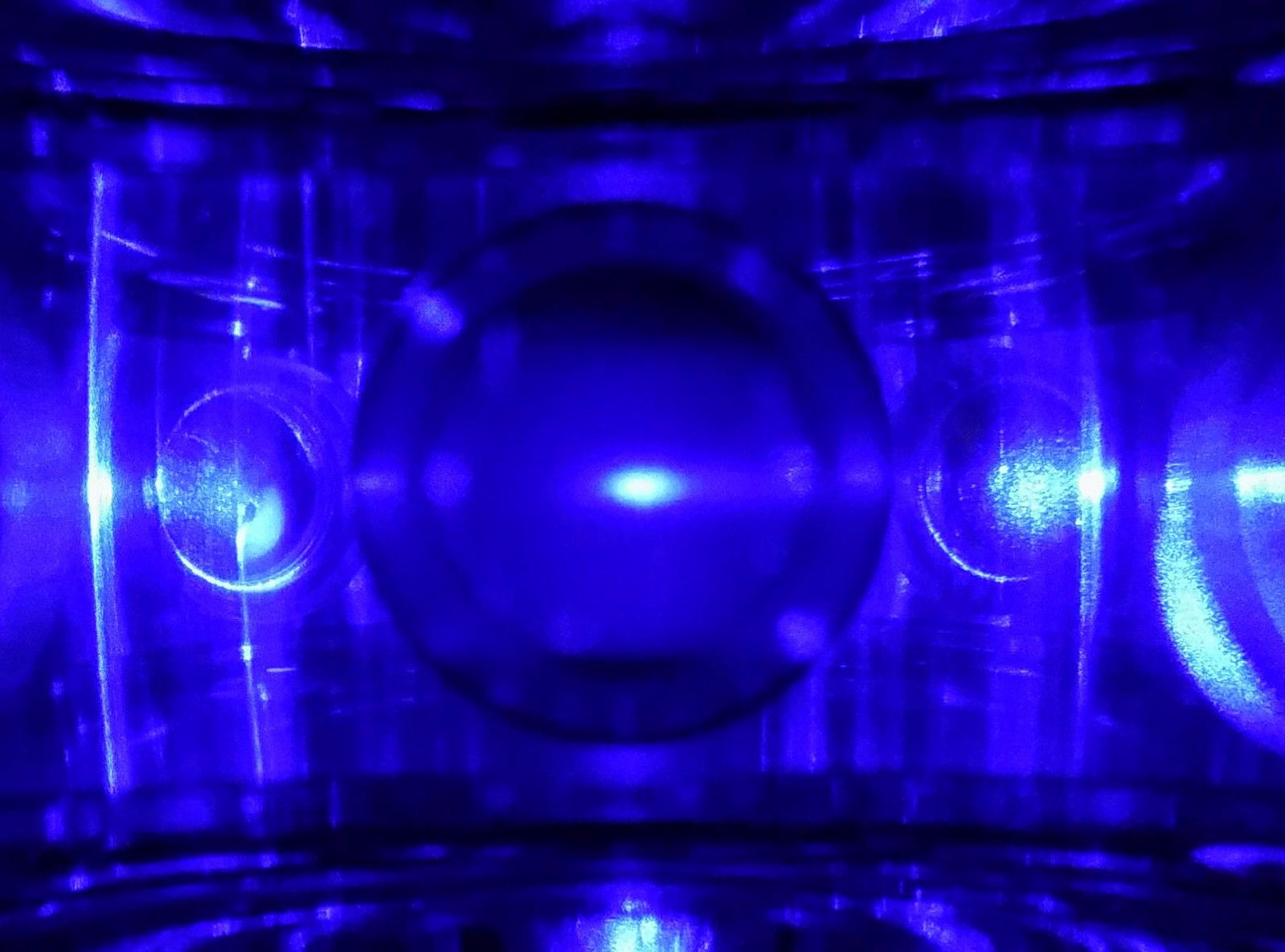
The Quantum gases (GAZ QUANTIQUES) research network gathers this community in a broad sense merging the communities interested in quantum fluids of light and in ultra-cold atoms. These research domains share the same type of scientific questions often originating from condensed-matter physics. They also share a common quantum simulation approach using well controlled and characterized artificial systems. Each experimental system brings complementary advantages. The whole domain is characterized by a strong link between theories and experiments. The GDR will permit discussions and training about both experimental and theoretical novel techniques and will help
maintaining the French community at the forefront of research.
COORDINATION
- Coordinateur : Thomas BOURDEL (LCF)
- Coordinatrices adjointes : Anna MINGUZZI (LPMMC), Mathilde HUGBART (INPHYNI), Carlos GARRIDO ALZAR (SYRTE)
THÉMATIQUES
- Metrology
- Atom interferometry
- Quantum gases and fluids
- Superfluidity
- Transport
- Topology
- Quantum correlations
- Quantum magnetism
- Out-of-equilibrium dynamics
COMMUNAUTÉ
- 220 researchers involved
- within 28 laboratories
HPERO | Halide Perovskites
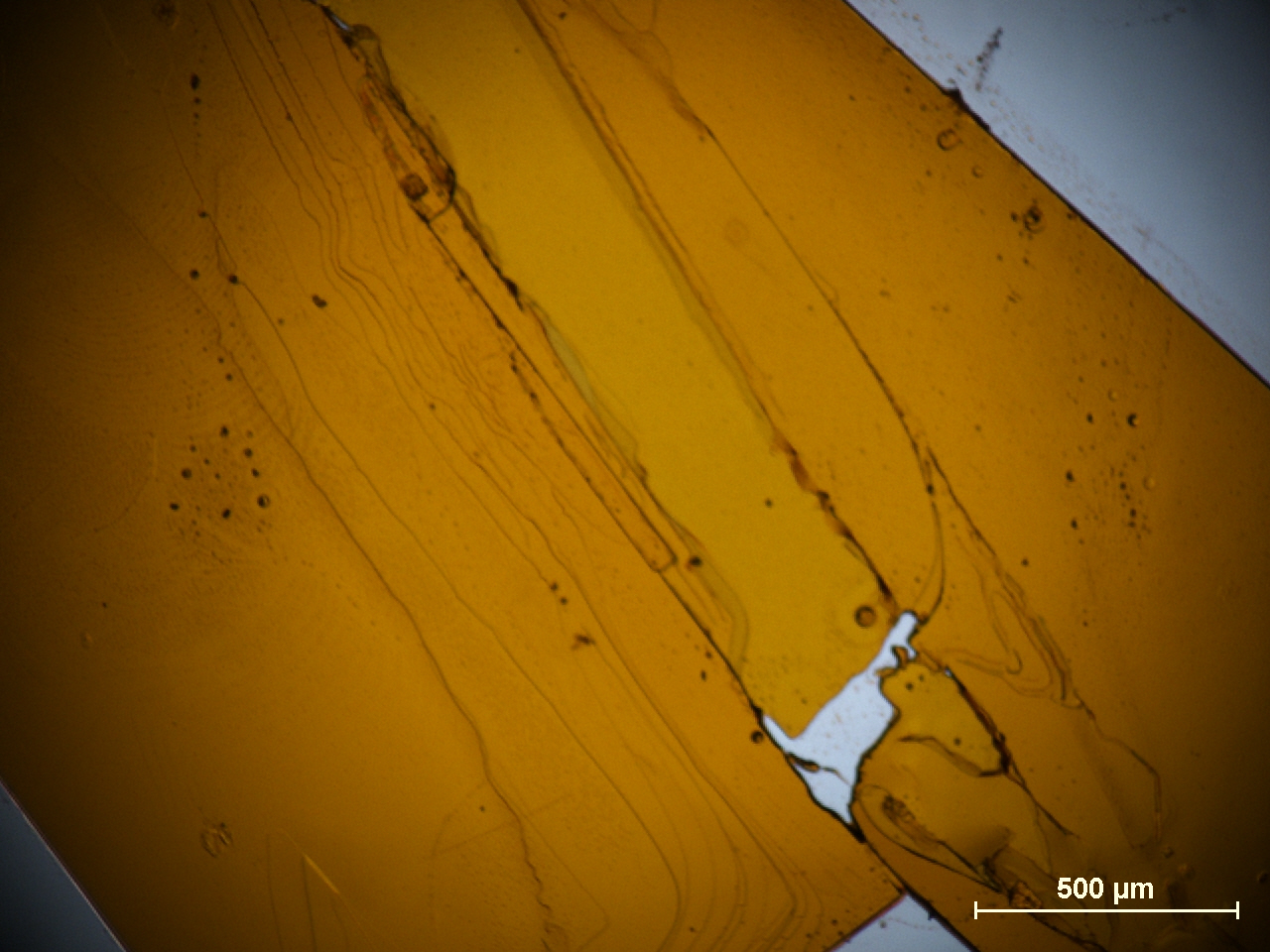
The Halide Perovskites (HPERO) research network is dedicated to halide perovskites. It offers a multidisciplinary approach mixing fundamental and applied aspects, so as to create a synergy capable of developing new concepts as well as opening new potentials in terms of applications.
* Pérovskites halogénées
COORDINATION
- Coordinatrice : Emmanuelle DELEPORTE (LUMIN)
- Coordinateur(s)/Coordinatrice(s) adjoint(es) : Romain GAUTIER (IMN), Sébastien PILLET (CRM2), Jacky EVEN (FOTON), Thanh-Tuan BUI (LPPI), Zhuoying CHEN (LPEM), Johann BOUCLE (XLIM)
THÉMATIQUES
- Material engineering
- Structural studies and defects
- Physical properties
- Interfaces
- Photovoltaics
- Emergent developments
COMMUNAUTÉ
- 175 researchers involved
- within 42 laboratories
IAMAT | Artificial intelligence in materials science
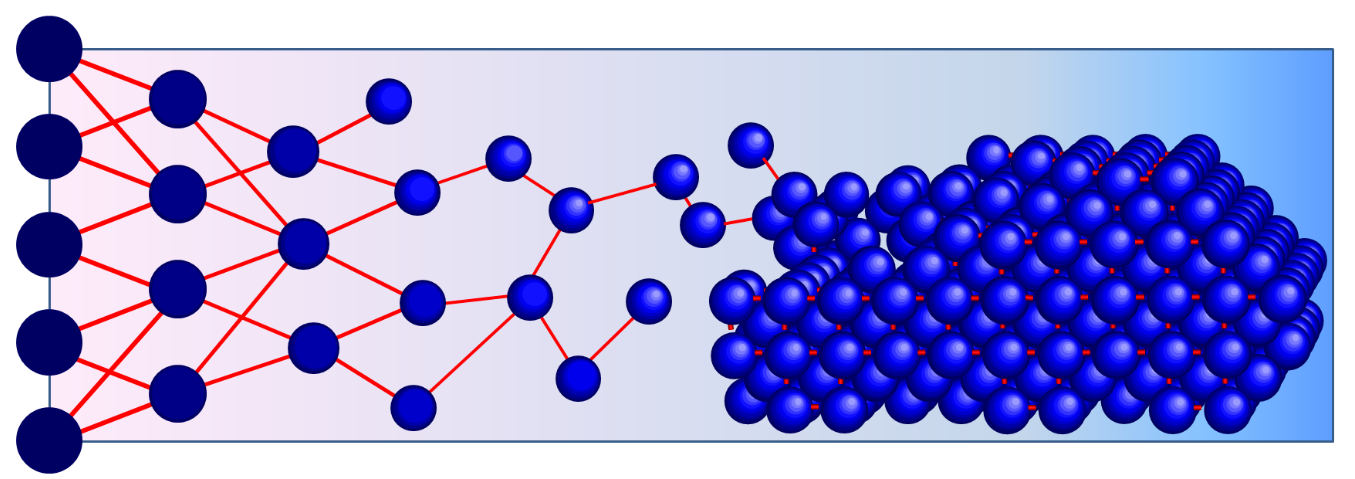
The mission and main objective of the Artificial intelligence in materials science (IAMAT) research network is to bring together the many teams and different communities interested in artificial intelligence approaches in theoretical and experimental materials science. The scientific topics cover the continuum from AI developments to concrete applications in materials science. The key goals are to promote educational exchanges between communities, particularly through transverse actions, and to foster new inspirations and collaborations.
COORDINATION
- Coordinateur : Antonino Marco SAITTA (IMPMC)
- Coordinateur(s)/Coordinatrice(s) adjoint(es) : Magali BENOIT (CEMES), Silke BIERMANN (CPhT), Jean-Claude CRIVELLO (IMCPE)
THÉMATIQUES
- Machine learning for atomistic and multiscale simulations (quantum models, molecular dynamics, mesoscopic and multiscale modeling)
- High-throughput characterization (smarter data collection, accelerated data treatment, data enhancing, feature recognition)
- Materials design and structure-properties relations (inverse design, optimization of heterogeneous data, prediction of complex and/or non-measurable properties)
COMMUNAUTÉ
- 450 researchers involved
- within 80 laboratories
IDE | Interaction, disorder, elasticity
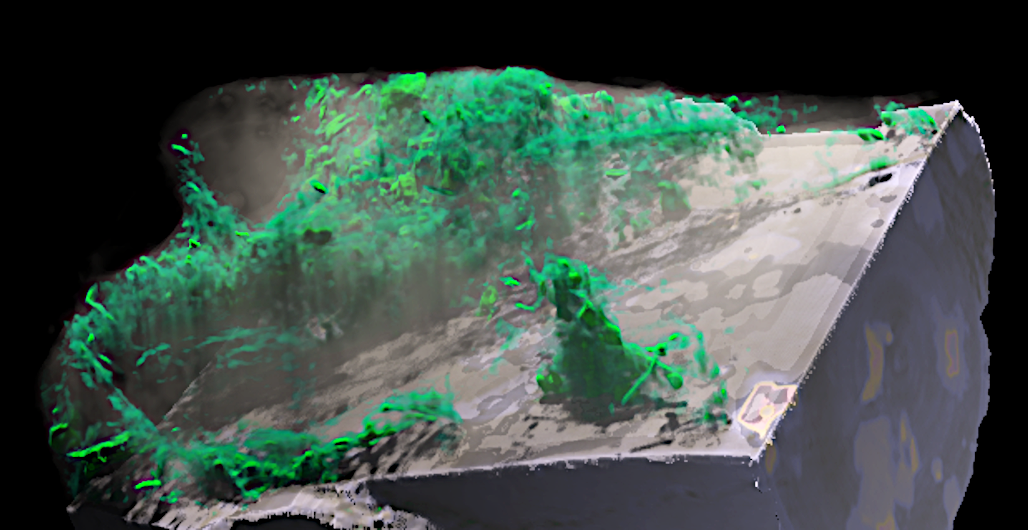
The mission of the Interaction, disorder, elasticity (IDE) research network is to lead to collaborations whose common point is the study of phenomena where heterogeneities play an essential role – both at the theoretical and experimental level – and well described by the framework of disordered elastic systems. The purpose of the GDR is to promote exchanges between communities working on systems of very different nature or scales, although described within this same framework, in order to pool the varied expertise on open questions and initiate new research themes.
COORDINATION
- Coordinateur : Vivien LECOMTE (LIPhy)
- Coordinateur(s)/Coordinatrice(s) adjoint(es) : Elisabeth AGORITSAS (DQMP - Genève), Damien VANDEMBROUCQ (PMMH)
THÉMATIQUES
- Disordered elastic systems
- Sheared amorphous materials
- Magnetic walls and ferroelectric domains
- Growth and propagation of fronts
- Plasticity and fracture (avalanches)
- Interfaces in biophysics and active matter
COMMUNAUTÉ
- 186 researchers involved
- within 43 laboratories
ISM | Interfacial Soft Matter
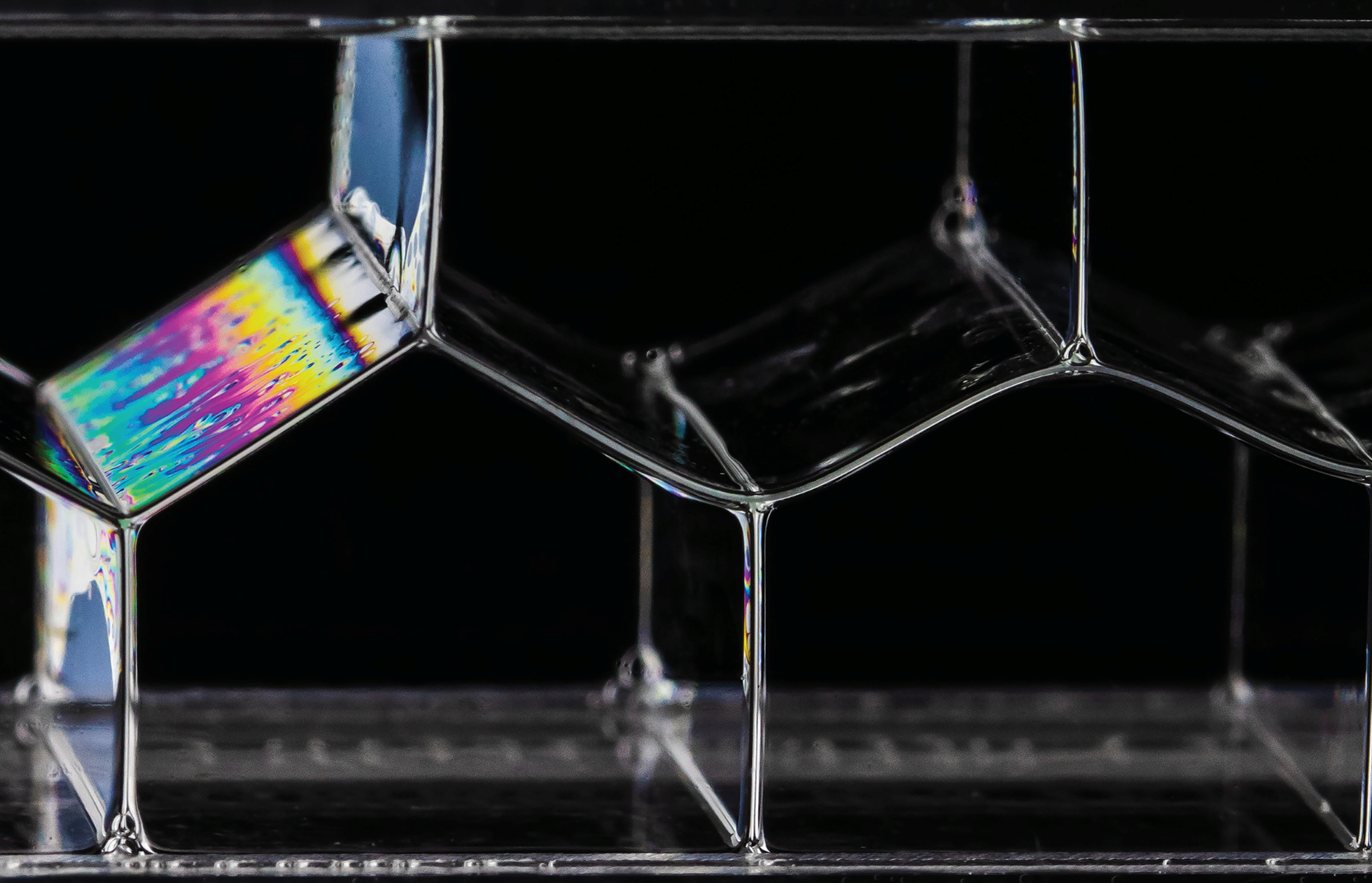
The mission of the Interfacial Soft Matter (ISM) research network is to emphasize and understand the structure and dynamics of thermally dominated systems near the boundary between a liquid and another phase. ISM provides a forum for the French and international communities - from physics, chemistry and engineering backgrounds and using a diverse set of experimental, theoretical and computational tools - studying the domain to congregate and exchange ideas.
COORDINATION
- Coordinateur : Joshua D. MCGRAW (Gulliver)
- Coordinateur(s)/Coordinatrice(s) adjoint(es) : Lionel BUREAU (LiPhy), Cecile COTTIN-BIZONNE (iLM), Benjamin CROSS (LiPhy), Vincent LADMIRAL (ICGM)
THÉMATIQUES
- Mechanics of soft interfaces
- Surfaces in contact with electrolytes
- Active matter
- Soft functional layers
- Structure-property relations
COMMUNAUTÉ
- 370 researchers involved
- within 50 laboratories
LEPICE-HDE | High-energy lasers and plasmas under extreme conditions
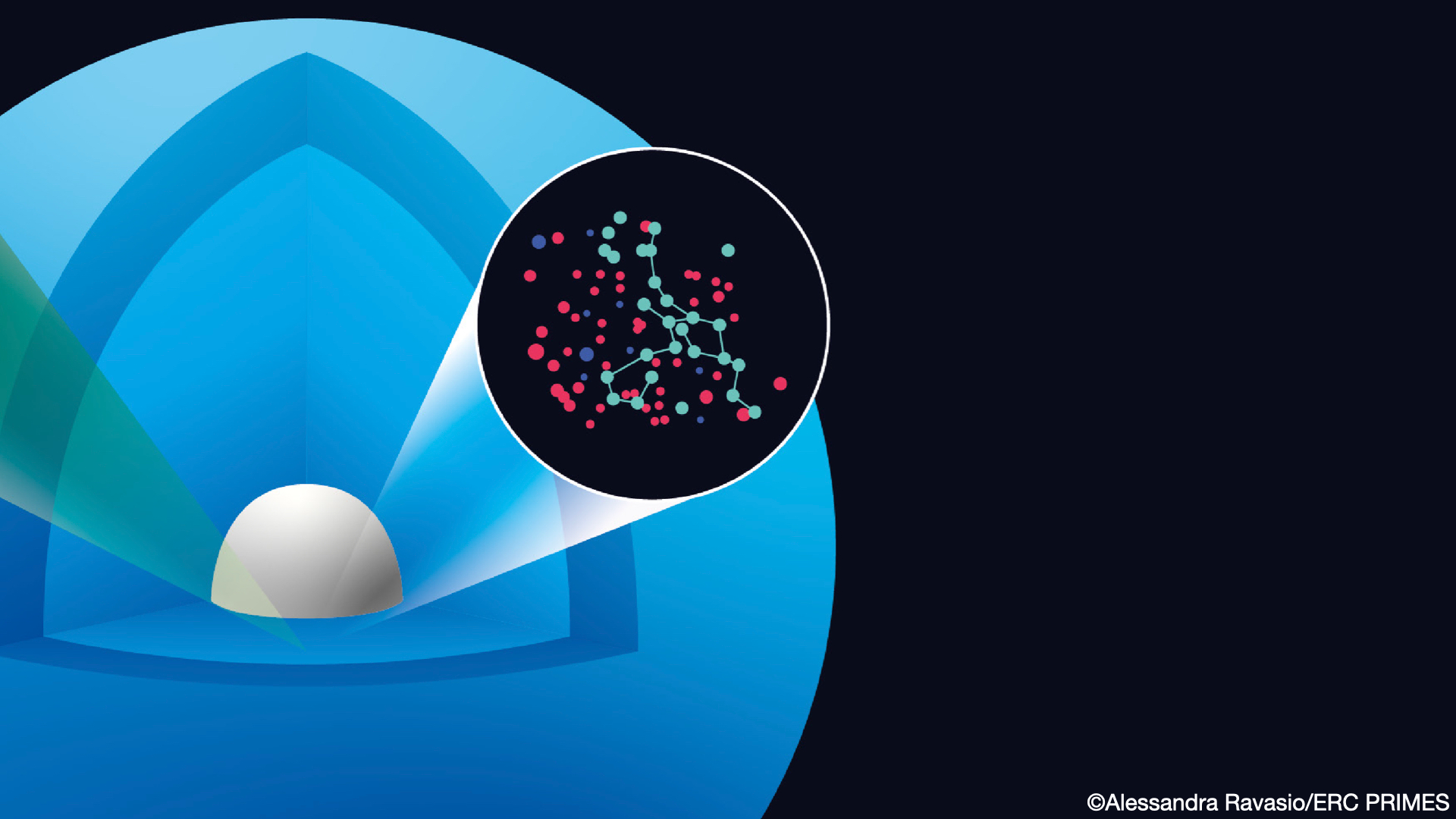
The mission of the High-energy lasers and plasmas under extreme conditions (LEPICE-HDE) research network is to bring together the French community working on high energy density (HED) physics related to high energy lasers. Its role is to strenghten the exchange between the numerous research teams with the aim of developing new experimental and diagnostic tools, as well as improving the modelling capabilities for HED physics in the frame of laser-generated plasmas.
COORDINATION
- Coordinateur : Stefan HÜLLER (CPhT)
- Coordinatrice adjointe : Alessandra BENUZZI-MOUNAIX (LULI )
THÉMATIQUES
- Laser-generated shocks, matter under extreme conditions, planetology, geophysics
- Hydrodynamics and transport in the context of inertial confinement fusion (ICF)
- Laser-plasma interaction: laser beam propagation in warm plasmas, anomalous absorption
- Atomic physics in warm and dense plasmas, atomic physics in the presence of intense fields
- Laboratory astrophysics in laser plasma experiments
- Laser generated radiation sources and their application to high energy density physics and nuclear physics
COMMUNAUTÉ
- 208 researchers involved
- within 39 teams in 30 laboratories
MAQ-PHEE | Quantum materials and emerging phenomena
The mission of the Quantum Materials and Emerging Phenomena (MAQ-PHEE) research network is to bring together a broad scientific community structured around current and future developments in the field of quantum materials. Quantum materials cover a range of areas, from strongly correlated electron systems producing new states of matter to topological materials developing properties linked to quantum effects. At the microscopic level, fundamental degrees of freedom of a quantum nature interact and give rise to unusual collective phenomena and complex macroscopic states. These are phenomena that can bring new functionalities that will certainly be at the heart of next-generation technologies.
COORDINATION
- Coordinateur : Sébastien BURDIN (LOMA)
- Coordinateur adjoint : Daniele PREZIOSI (IPCMS)
THEMATICS
- Magnetism
- Superconductivity
- New unconventional states and phenomena in correlated quantum materials
- Emerging properties and functional quantum materials
- Innovation accelerators and prospects for breakthroughs: new computing technologies (AI, quantum algorithms), out-of-equilibrium phenomena, large instruments.
COMMUNAUTÉ
- 350 researchers involved
- within 45 laboratories
MATÉPI | Epitaxial materials
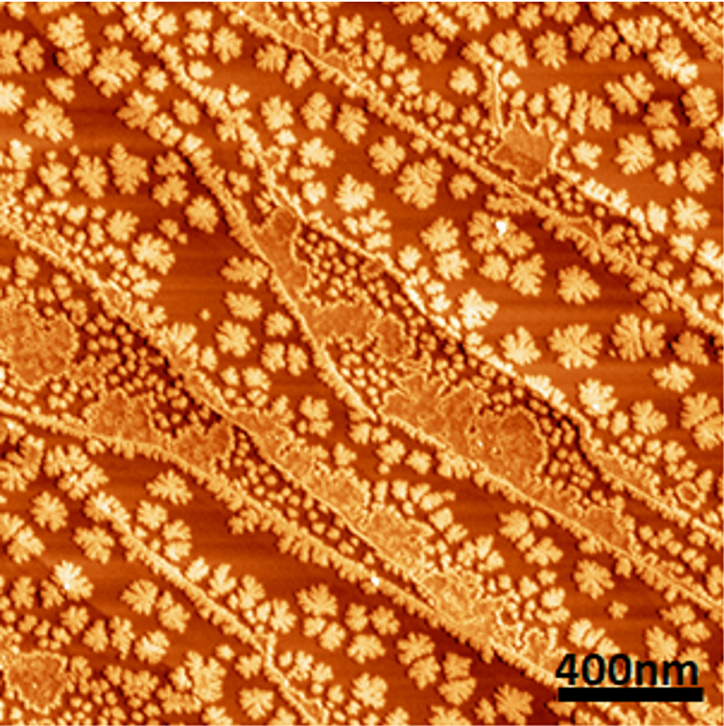
The mission of the GDR Epitaxial materials (MATÉPI) is to bring together the French community working on the growth, characterization and application of epitaxial systems. It aims to promote epitaxy as a discipline of its own and for others, an academic discipline with its own challenges, with strong industrial and economic implications. This GDR aims to foster a deeper understanding of non-equilibrium effects in growth mechanisms, explore the link between the quality of epitaxy at ultimate scales and the structures and properties of epitaxial devices, delve deeper into the functionalization of materials, as well as the industrial applications of epitaxy.
Several crucial issues are addressed by this GDR: highlighting and disseminating the advances made by the epitaxy community, disseminating knowledge, bringing together different groups to stimulate new collaborations and interactions between different communities (semiconductors, oxides, 2D materials, metallic materials...), but also between theory/experiment, fundamental/applied, academic/industrial, etc. As epitaxy is at the heart of technological innovation, the attention paid to its development is closely linked to industrial ambition and economic sovereignty.
COORDINATION
- Coordinateur : Jean-Noël AQUA (INSP)
- Coordinateur(s)/Coordinatrice(s) adjoint(es) : Mathieu ABEL (IM2NP), Thierry BARON (LTM), Laurence MÉCHIN (GREYC)
THEMATICS
- Epitaxy and interactions
o Modeling and prediction
o Epitaxy under strong interactions
o Epitaxy under weak interactions (van der Waals)
o Instrumental developments and ex- and in-situ characterizations
- Engineering of epitaxial materials, new functions and industrial applications
o Epitaxy of nanostructures and new systems
o Coupling epitaxy/properties
o Ultimate properties and quantum engineering
o Functionalization of materials
o Industrial issues: from material to device
COMMUNAUTÉ
- 429 researchers involved
- within 43 laboratories
MESO | Mesoscopic quantum physics
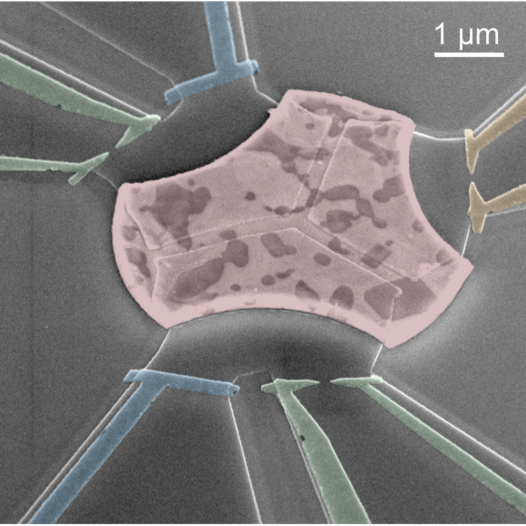
The mission of the Mesoscopic quantum physics (MESO) research network is to bring together the French community whose activities are focused on coherent electronic transport in conductors of all sizes and types (hybrid systems, topological insulators, graphene, etc.). Recent theoretical and experimental developments focus on the manipulation of the quantum states of such systems, and on very large bandwidth experiments.
COORDINATION
- Coordinateur : Guillaume WEICK (IPCMS)
- Coordinateur(s)/Coordinatrice(s) adjoint(es) : Hélène LE SUEUR (SPEC/IRAMIS/CEA) et Nicolas ROCH (NEEL)
THÉMATIQUES
- Coherent manipulation of charge and spin degrees of freedom
- Hybrid systems, Dirac and topological matter
- Open quantum systems
- Mesoscopic thermodynamics
COMMUNAUTÉ
- 350 researchers involved
- within 36 laboratories
NATURE | Nouveaux matériaux et dispositifs durables
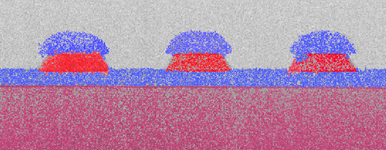
The New Sustainable Materials and Devices (NATURE) research network brings together specialists from physics, materials science, and engineering who are engaged in the physical fabrication and study of the properties of more sustainable (nano)materials and devices. This interdisciplinary GDR also brings together geophysicists and philosophers who explore the relationships between science, technology, and ecological transition. The materials of interest target strategic applications related in particular to energy, the environment, and health.
COORDINATION
- Coordinatrice: Caroline BONAFOS (CEMES)
- Coordinateurs adjoints : Fabrice Gourbilleau (CiMAP), David Babonneau (PPrime)
THEMATIcS
- Environmental impact of (nano)materials and devices
- Life Cycle Assessment (LCA)
- Eco-design
- Materials and devices for sustainable development
COMMUNAUTÉ
- 200 researchers involved
- within 46 laboratories
NS-CPU | Nanosciences with near-field microscopy under ultra-high vacuum
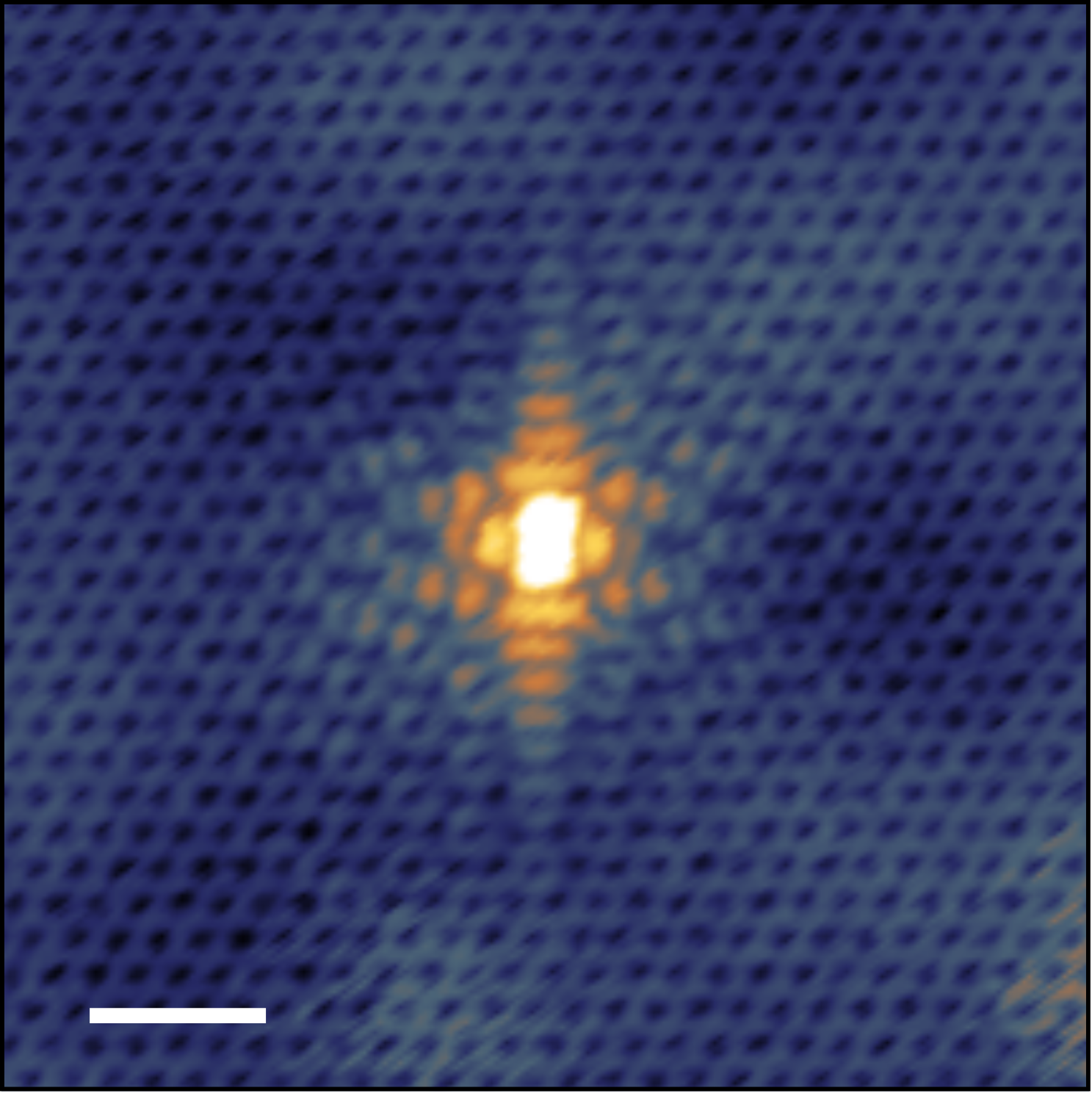
The mission of the Nanosciences with near-field microscopy under ultra-high vacuum (NS-CPU) research network is to bring together the French community whose “nanoscience” research activities are based on scanning probe microscopy (SPM) techniques operating under ultra-high vacuum (UHV). Indeed, a typical phenomenon in nanoscience results from a physical, chemical, magnetic, mechanical or optical fact that must be measured by individual and direct observations with spatial precision of the order of a picometre.
COORDINATION
- Coordinateur : Jérôme Lagoute (MPQ)
- Coordinatrice adjointe : Loranne Vernisse (Pprime)
THEMATICS
- Electronic and vibrational structure of individual nanostructures and nano-objects
- Nanometer-scale light-matter interactions
- Study of local magnetism and quantum states
- Electronic, electrostatic properties and charge transfer
- Theoretical concepts and computational tools
COMMUNAUTÉ
- 180 researchers involved
- within 23 laboratories
Or-Nano | Nanometric gold
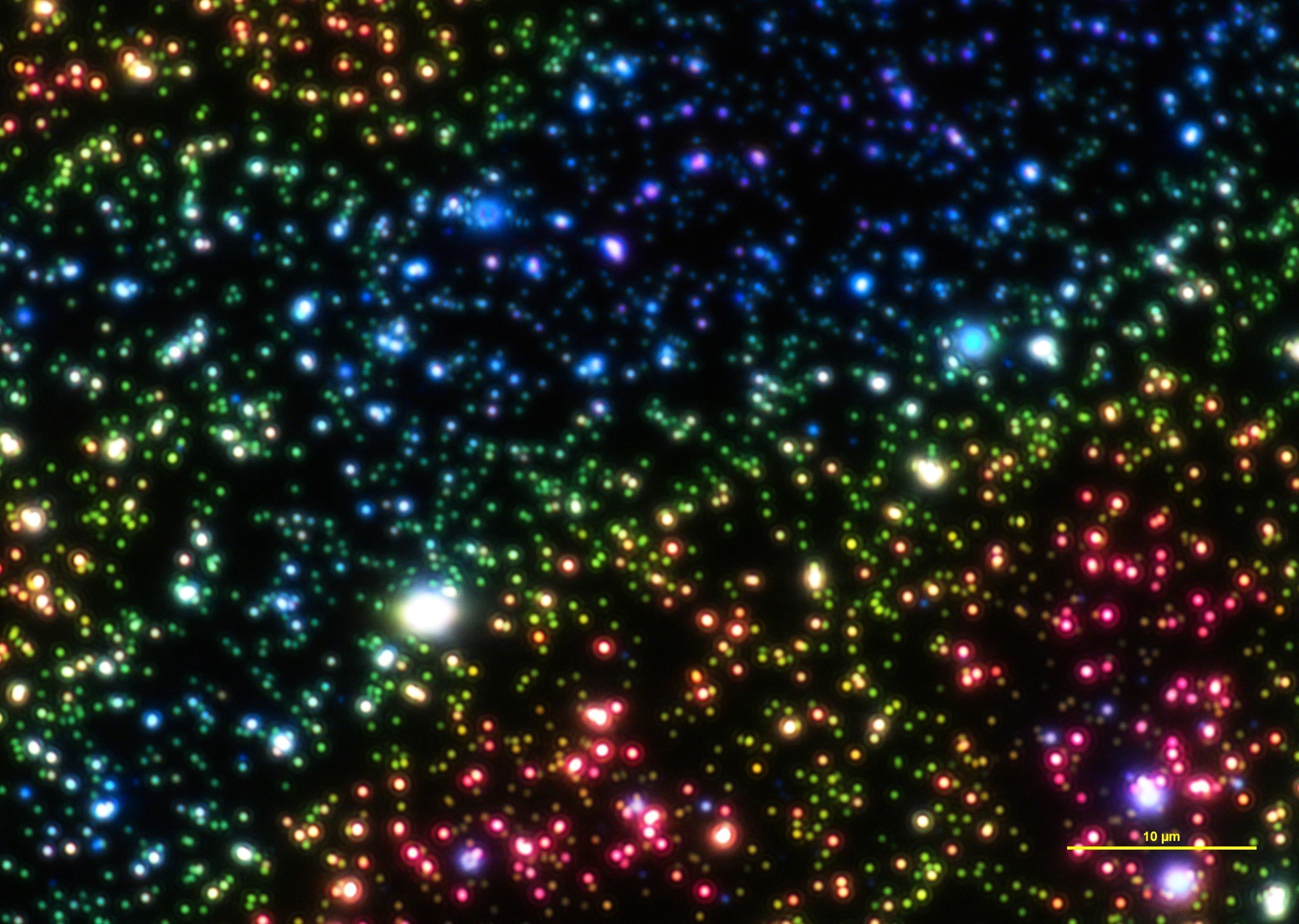
The mission of the Nanoscale gold and gold nanoparticles (Or-nano) research group is to initiate and support collaborations of its researchers on topics related to gold nanoparticles, nanoscale gold films or gold-based complexes. The GDR organises two series of regular events in France: the Or-nano conferences which are of multidisciplinary nature and the Or-nano Discussions which aim to deal in depth with a hot topic. Particular support is offered to doctoral students, notably through exchange grants between affiliated labs to participate in scientific events. Or-nano strongly encourages its members to carry out outreach activities in order to make the general public aware of the
research conducted in its laboratories. Since its creation in 2006, Or-nano has confirmed its dynamism by regularly evolving its topics, and thus aims to actively contribute to the relevance of French research on the world stage.
COORDINATION
- Coordinatrice : Olivier PLUCHERY (INSP)
- Coordinatrice adjointe : Hazar GUESMI (ICGM)
THEMATICS
- Plasmonic nanostructures, nano-antennas, modelling
- Hot electron physics and plasmonic catalysis
- Nanoparticles for nanoelectronics and molecular electronics
Reactivities at interfaces: biosensors, life diagnosis and electrocatalysis - Synthesis of gold nanoparticles and nanoparticle assemblies with controlled morphology
- New instrumental challenges for the characterization of single nano-objects: optical microscopies, X-ray microscopies, synchrotron facilities
- Fluorescence and magnetic properties of gold complexes and gold clusters
- Gold nanoparticles for health: toxicity, delivery, theranostics, clinical applications
- Transverse axis: gold in the history of science, in the science-society dialogue and in heritage objects
COMMUNAUTÉ
- 450 researchers involved
- within 69 laboratories
PhyTop | Topological Physics
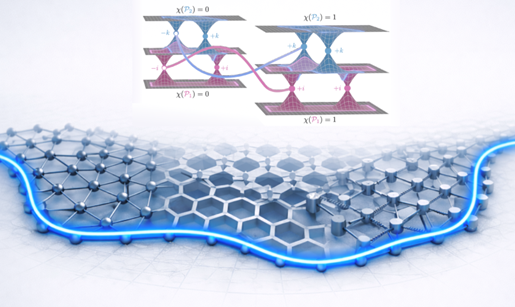
The mission of the Topological Physics research network (PhyTop) is to study the topological and geometric properties that emerge in classical and quantum physical systems. It aims to bring together researchers working on a wide variety of platforms, at all scales, around this common theme, from nanoscience to metamaterials, from photonics to phononics, from acoustics to fluids. It seeks to develop cross-disciplinary theoretical concepts and tools, drawing in particular on interactions with mathematics, to identify new topological systems, to reveal original topological effects in various physical systems, and to exploit their properties in the most appropriate experimental platforms.
COORDINATION
- Coordinateur : Pierre DELPLACE (LPENSL)
- Coordinateurs et coordinatrices adjointes : Alberto AMO (PhLAM), Jacqueline BLOCH (C2N), Clément TAUBER (CEREMADE), Georgios THEOCHARIS (LAUM)
THÉMATIQUES
- Topological properties of classical and quantum waves
- Topological defects and obstructions in structures and phases
- Mathematics of topological insulators
- Non-Hermitian and non-linear systems
- Artificial gauge fields
- Manipulation of edge and surface states
COMMUNAUTÉ
- 150 researchers involved
- within 37 laboratories
SOPHY | Soft Physics for Hard Materials
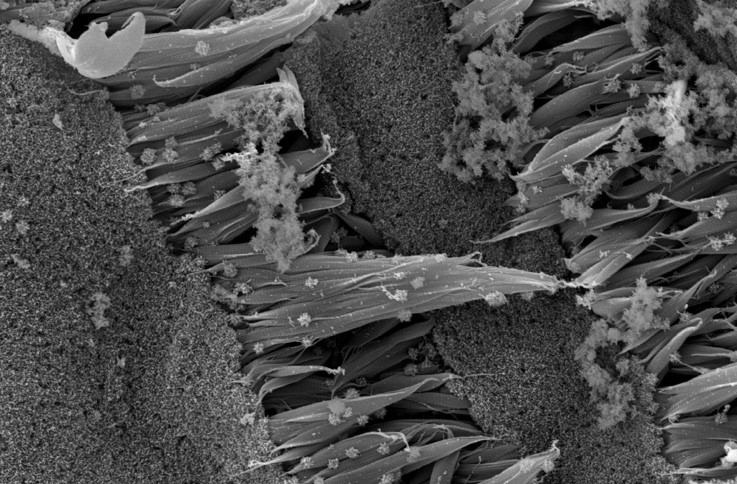
The mission of the GDR Soft Physics for Hard Materials (SoPHy) is to bring together the French community involved in the study of hard materials obtained from soft precursors. This is the case for a wide range of materials such as cement, porous supports for catalysis, and biologically-inspired or -derived materials such as mother-of-pearl or collagen-based composites involving biomineralization processes. This GDR covers all the stages involved in synthesizing and obtaining hard materials, involving complex physical processes associated with the application of internal stimuli (e.g. ice templating, etc.) or external stimuli (e.g. mechanical shearing, high-power ultrasound, etc.) during the shaping of the soft precursor. This GDR will examine the possibility of playing on the structural, mechanical or functional properties of these precursors to better control their final properties in the hardened state.
COORDINATION
- Coordinateur : Sylvain DEVILLE (ILM)
- Coordinateur adjoint : Thibaut DIVOUX (LPENSL)
THEMATICS
- Synthesis and characterization of elementary bricks
- Organization and self-assembly processes
- Use of external fields to texture the material
- Transformation during the transition from soft to hard state
- Evolution of the material during shaping
- Analysis of properties in the hardened state
- Modeling of different means of texturing the material
COMMUNAUTÉ
- 300 researchers involved
- within 60 laboratories
MecaQ | Optomécanique et nanomécanique quantiques
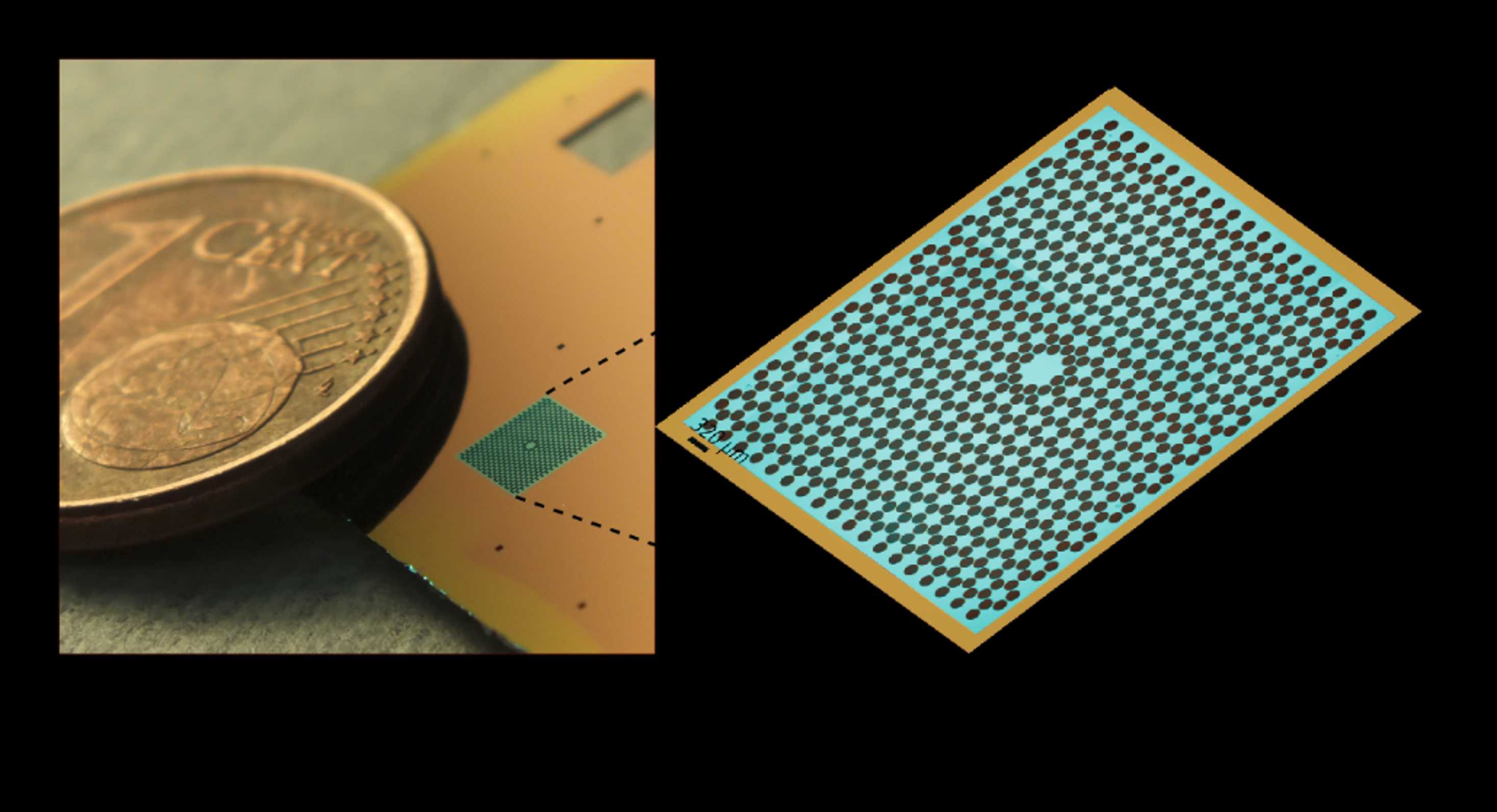
The mission of the GDR Ultra-Sensitive Mechanical Systems: Phononics, Optomechanics, and Nanomechanics (Symphonique) is to bring together the French research community whose work is related to nanomechanics and optomechanics, particularly in the regime where quantum fluctuations play a significant role. Metrology, ultrasensitive measurements, and quantum information are among the research topics of the MecaQ GDR.
COORDINATION
- Coordinatorr : Pierre VERLOT (LUMIN)
- Deputy coordinators : Xin ZHOU (IEMN), Daniel LANZILOTTI-KIMURA (C2N) et Anne LOUCHET-CHAUVET (Institut Langevin)
THÉMATICS
- Quantum Thermodynamics
- Nanomechanics and Nonlinear Optics
- Theory of Nanomechanical Systems
- Optomechanical Sensors
- Quantum Optomechanics
- Hybrid Systems
- Optomechanics and Fundamental Physics
- Electro-optomechanics
- Nanofabrication & Nanomechanical Engineering
- Micro-/nano-optomechanics in industry
- Nanophotonics and phonon transport
COMMUNAUTÉ
- 120 researchers involved
- within 32 laboratries
THÉORIE & CLIMAT | Theoretical challenges for climate sciences
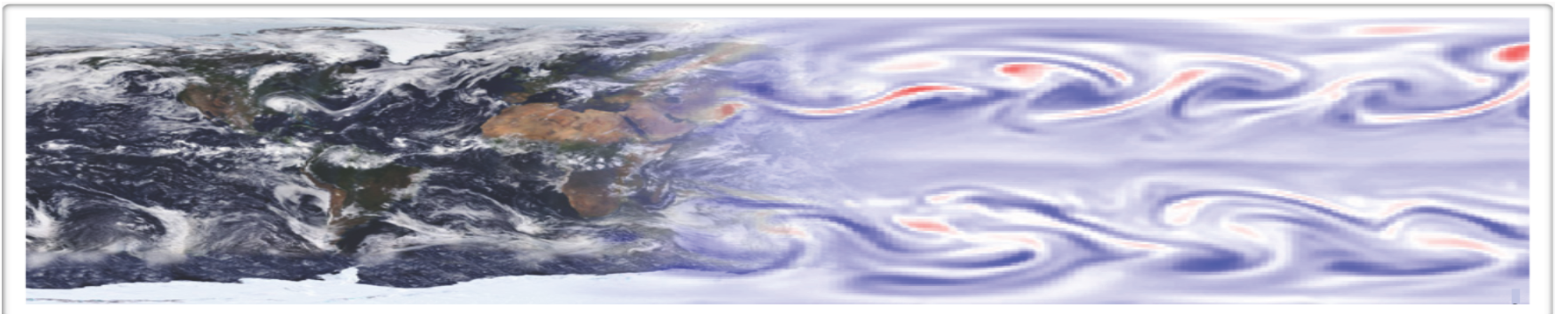
The Theoretical Challenges for Climate Sciences (Théorie & Climat) gathers the community of theoreticians: physicists, climatologists, oceanographers, atmospheric scientists, mathematicians, computer scientists, numerical scientists, machine learners, who work on climate sciences. Its aim is to develop innovative theoretical and numerical tools to overcome current scientific gaps. Approaches in statistical physics, turbulence modelling, mathematics and machine learning will help to deepen the understanding of fundamental mechanisms, improve models, and better predict extreme climate events to reduce uncertainties about the impacts of climate changes. This GDR has a strong interdisciplinary vocation and involves researchers from several CNRS institutes, many other French scientific organizations, and private companies.
COORDINATION
- Coordinateur : Corentin Herbert (LPENSL)
- Coordinateur(s)/Coordinatrice(s) adjoint(es) : Aurélie Fischer (LPSM), Rym Msadek (CECI-CERFACS)
THÉMATIQUES
- Climate dynamics
- Ocean and atmospheric dynamics
- Machine learning and climate
- Mathematics and climate - Statistics
- Mathematics and climate - Numerical analysis and data assimilation
- Stochastic modelling
- Physics, non-linear dynamics and climate
- Statistical physics and climate
- Turbulence and geophysical flows
- Relationship between observations, data and model integration
COMMUNAUTÉ
- 200 researchers involved
- within 19 laboratories
TeQ | Quantum technologies
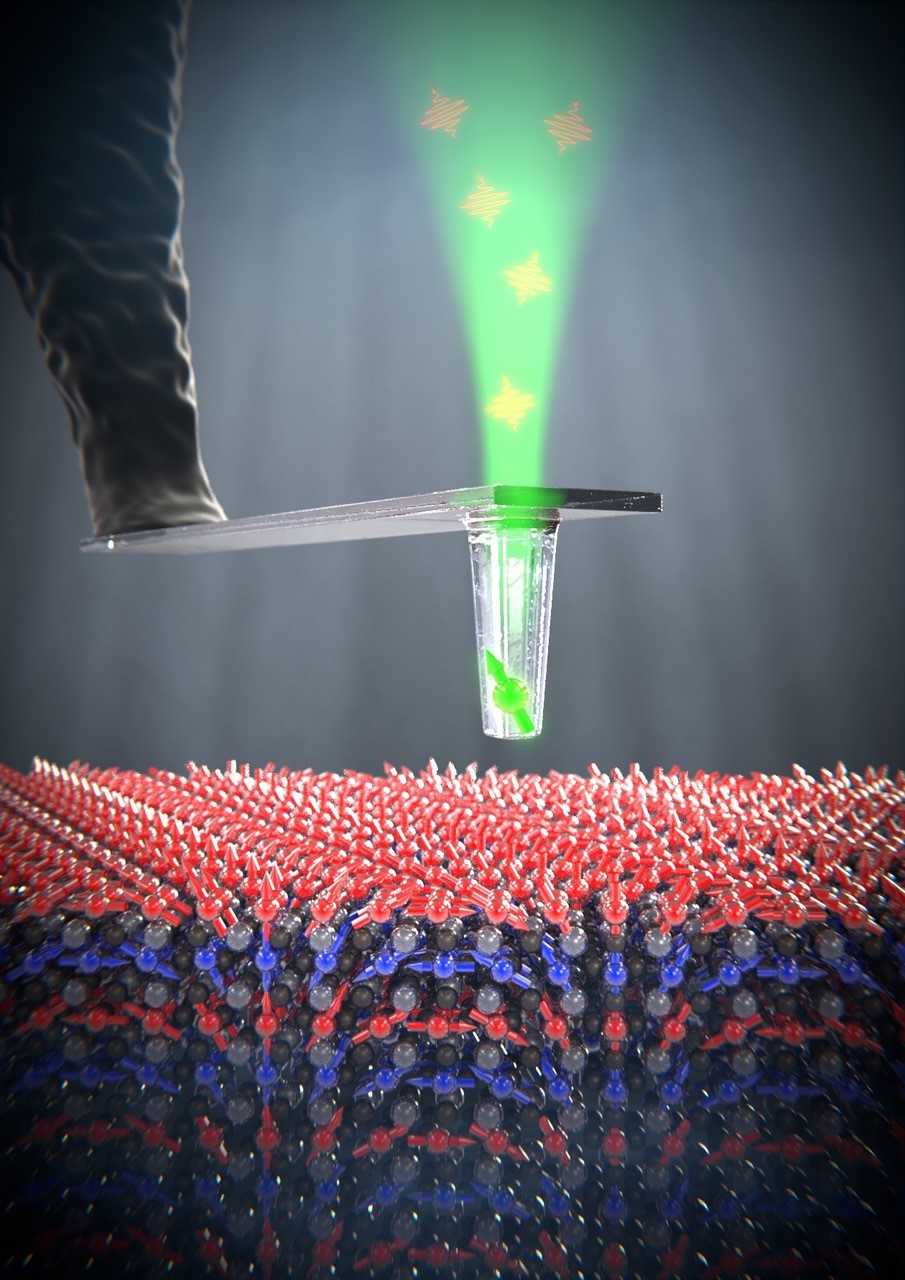
The mission of the GDR Quantum technologies (TeQ) is to bring together the multidisciplinary French community whose research activities cover the broad spectrum of quantum technologies, from physics to computer science, mathematics and chemistry. This GDR encompasses all the different types of physical support for quantum information, such as photons, trapped atoms and ions, quantum boxes and point defects in the solid state, superconducting circuits, hybrid quantum systems... In particular, its scientific scope combines theoretical and experimental developments, ranging from highly exploratory aspects to engineering aspects on mature technologies.
COORDINATION
- Coordinatrice : Anaïs DRÉAU (L2C)
- Coordinateur adjoint : Alexei OURJOUMTSEV (JEIP)
THÉMATIQUES
- Quantum communications
- Quantum computing and algorithms
- Quantum simulation
- Quantum metrology and sensors
- Fundamental quantum aspects
- Quantum engineering and transverse methods
COMMUNAUTÉ
- 1000 researchers involved
- within 100 laboratories
UP | Ultrafast Phenomena
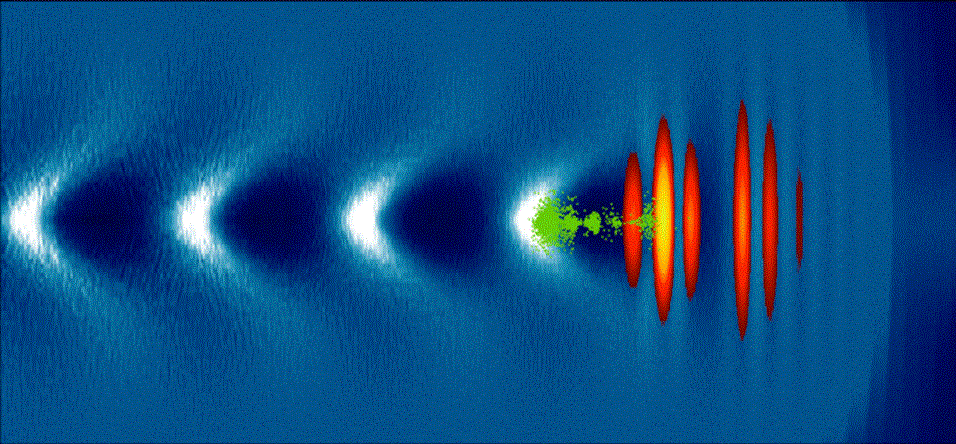
The Ultrafast Phenomena (UP) research network brings together French experimentalists and theorists interested in physical phenomena at ultrafast time scales (attoseconds, femtoseconds, picoseconds). The GDR focuses on phenomena such as charge dynamics, vibrations, energy transfer, structural changes, phase transitions, etc. The systems studied cover all phases of matter (dilute, solid, liquid, plasma), from simple or complex atoms and molecules, isolated or in condensed phase, to nanometric materials and objects. The physics and development of ultra-short secondary radiation sources (UVX, THz, electrons, protons) are also central to the UP GDR, reinforcing the emergence of new themes.
COORDINATION
- Coordinatrice : Sarah HOUVER (MPQ)
- Coordinatrice et coordinateur adjoint : Morgane VACHER (CEISAM), Stefan HAESSLER (LOA)
THÉMATIQUES
- Attosecond science
- Gas phase systems, from atoms to complex molecules
- Femto-chemistry and femto-biology in condensed phase
- Ultrafast dynamics in materials and nanostructures
- Secondary radiation sources, laser-plasma acceleration
- Large ultra-short radiation infrastructures
- Developments in ultrafast optics and instrumentation
- Methodological developments for theory
- Open science, data, and reproducibility
- Science communication and education
COMMUNAUTy
- 850 researchers involved
- within 46 laboratories
XFEL | Science with XFELs
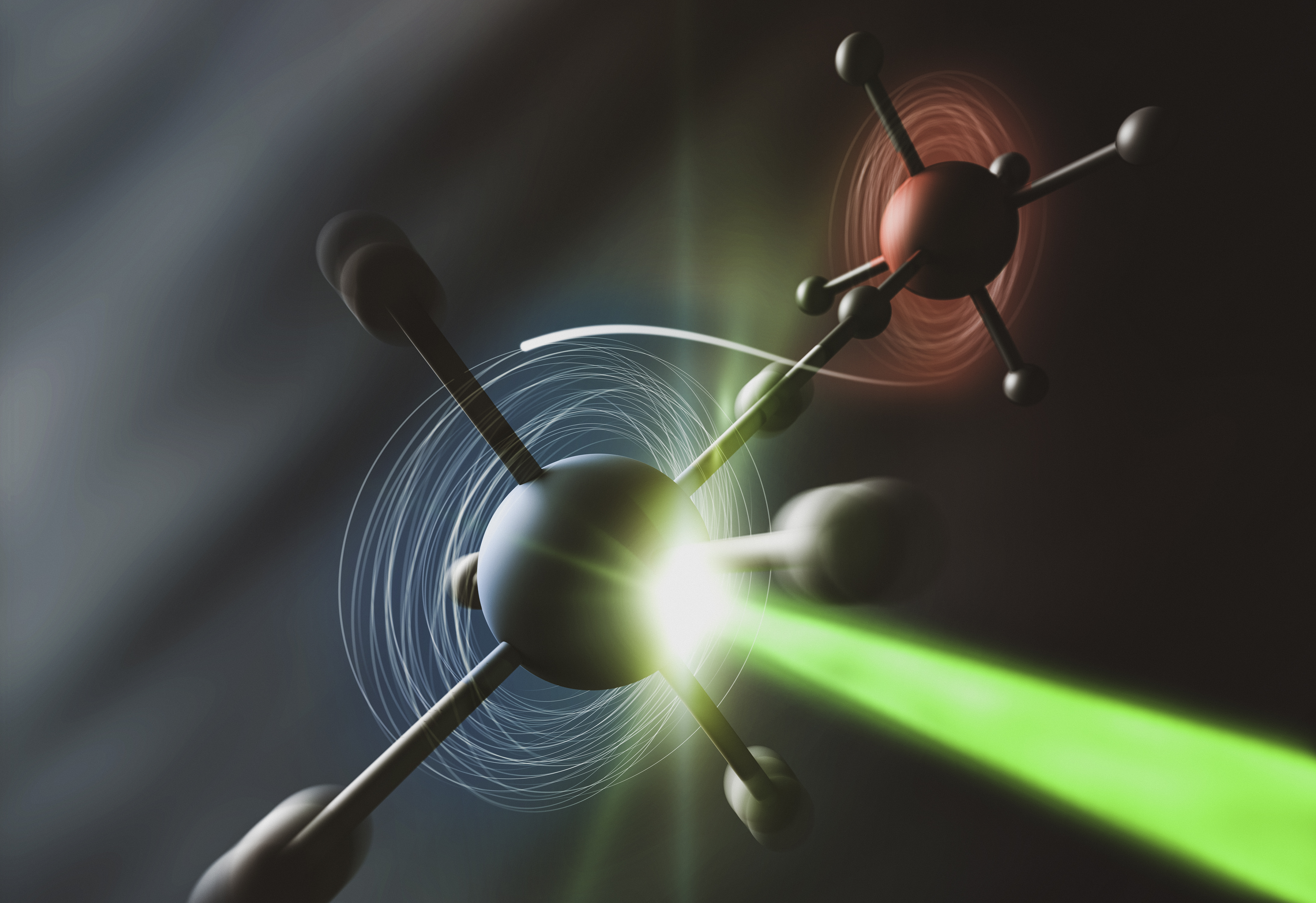
The mission of Science with XFELs (XFELs) research network is to bring the French community of involved researchers in studies using X-ray free-electron lasers (FELs) emitting in the X-ray domain. At the interface of physics, chemistry biology and universe sciences, the XFEL GDR aims at sharing know-how and at maintaining the community aware on the fast evolution of the possibilities provided by this kind of installation. To consolidate and expand the French community of users of these instruments, the XFEL research network also offers structured support to early-career researchers.
COORDINATION
- Coordinator : Jacques-Philippe COLLETIER (IBS)
- Deputy coordinators : Emmanuelle JAL (LCPMR), Guillaume MORARD (IMPMC)
THÉMATIQUES
- Condensed matter physics
- Atoms and molecules in diluted samples
- Extreme conditions
- Physics of plasmas and dense, warm matter
- Photochemistry and molecular photophysics
- Structural biology
- Machines
- Théorie
COMMUNAUTÉ
- 350 researchers involved
- within 42 laboratories