Thomas SalezChercheur CNRS au Laboratoire ondes et matière d'Aquitaine (LOMA)
Proof of concept
Consolidator Grant
CNRS bronze medal
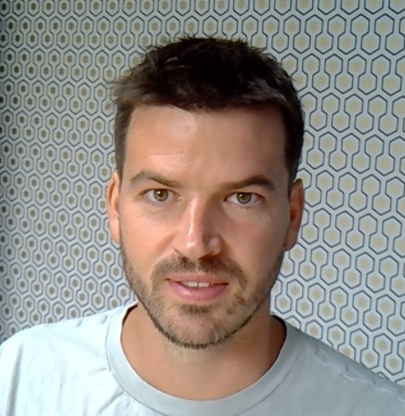
Thomas Salez is Senior researcher in Physics at the CNRS. He obtained his PhD at the ENS in Paris, where he developed an atomic cooling experiment at the Kastler Brossel Laboratory (LKB). He then joined the Gulliver Laboratory at the ESPCI Paris, where he studied soft matter theoretically. Within the EMetBrown group, which he created and now leads at the Laboratoire ondes et matière d'Aquitaine (LOMA, CNRS/University of Bordeaux) in Bordeaux, he studies the properties of complex and biological matter at interfaces, both experimentally and theoretically. He is the recipient of the CNRS Bronze Medal and the Michelin Prize from the French Academy of Sciences. He is associate editor of European Physical Journal E and a guest member of the collaborative research unit on complex matter at Hokkaido University in Japan and the Franco-Indian international research network on small-scale hydrodynamics and bioengineering. He also teaches master's courses at the University of Bordeaux and the Institut d'Optique. Finally, he co-founded the Canadian start-up MesoMat, which aims to produce new materials and smart sensors for aeronautics and robotics.
ERC PoC 2025 : Bio-physico-chemical Insights by Fluorescence-free Flow-induced Taylor Analysis using Neuronal Networks for Ensembles of Nanoparticles (BIFFTANNEN)
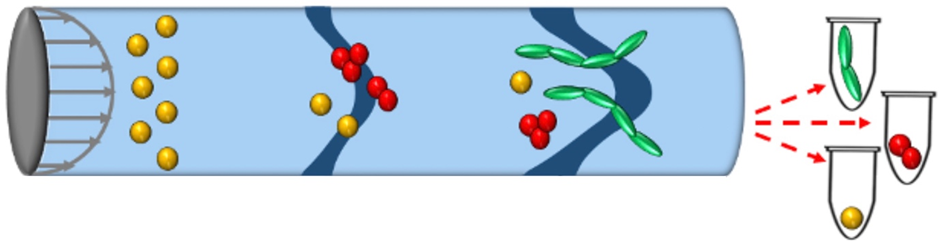
The characterisation of complex suspensions composed of microscopic entities is an essential task for control and purification processes in the water treatment, pharmaceutical, food and cosmetics industries. Existing methods for performing such tasks are often costly, low-throughput or high-volume, single-modal, based on external markers, with moderate resolution, and generally provide only partial information such as average particle size. By leveraging the fundamental knowledge acquired and methods developed as part of the EMetBrown project on microscopic transport in confinement, the BIFFTANNEN project aims to overcome the above limitations. The main objective is to develop and deploy an innovative and versatile bio-physico-chemical characterisation platform. It will uniquely combine state-of-the-art methods in microfluidics, imaging and deep learning, using absorption-based Taylor dispersion analysis, spectrometry and advanced statistical inference.
Characterisation platform developed as part of the project. Complex suspensions of microscopic entities (molecules, proteins, nanoparticles, oligomers, polymers, etc.) are advected, diffused or chemically reacted in a microfluidic chip fed via a reservoir selected by an automated syringe arm. Light absorption coupled with deep learning statistical inference methods makes it possible to reliably identify the species involved and reconstruct their size distributions over time.
ERC CoG 2021 : Mouvement brownien aux interfaces molles (EMetBrown)
Brownian motion is a central scientific paradigm with implications in fundamental physics, biology and even finance. By understanding that the apparent erratic motion of microscopic particles is a direct consequence of the motion of molecules in the surrounding fluid, pioneers such as Albert Einstein and Jean Perrin provided decisive proof of the existence of atoms. In an era of miniaturisation and surface science, it is relevant to reconsider this canonical problem by adding boundaries. Indeed, Brownian motion at interfaces and in confinement is a widespread situation in microbiology and nanofluidics. Consider, for example, the case of a protein at the edge of a cell membrane: in such a situation, surface effects could become dominant and drastically alter classical trajectories, and thus the entire machinery of life! By combining several cutting-edge methods, the EMetBrown project aims to experimentally measure and mathematically model the Brownian motion of micro- and nanoparticles that are free to move, trapped or attached, in the vicinity of complex interfaces.
Scientific news (2026) - Recent research reveals how microscopic mobile algae take advantage of the external flow in their liquid environment when exploring their natural habitat.