

How Physics Research Contributes to the Environmental Transition
09 février 2026
Physics research produces knowledge that supports the environmental transition. Physicists make discoveries and contribute to innovations that provide solutions to the major challenges our society faces.
Scientific Foresight on Transitions
The scientific foresight initiative of CNRS Physics, “Physics toward 2030: fundamental research and societal impacts,” is the outcome of a collective effort launched in spring 2022 involving more than 1,000 physicists. Physics is a fundamental science that requires long-term research and can lead to major discoveries capable of transforming our understanding of the world. It also offers solutions to the major challenges confronting our society.
The second part of CNRS Physics’ scientific foresight addresses the major societal challenges highlighted by French and European public policies. Within this section, the two chapters “Physics for the Environment, Urban Systems, and Food” and “Physics for Energy and Climate” present how physics research over the next ten years can contribute to environmental transitions.
The challenges for physics by 2030 in the fields of food, urban systems, and the environment are mainly linked to the transitions we are facing. Climate change goes hand in hand with increased demands for resource sobriety due to the finite nature of resources, as well as the need for resilience and adaptation. On these topics, the chapter “Physics for the Environment, Urban Systems, and Food” identifies both the challenges and urgent issues to be addressed, as well as the associated emerging topics in physics.

Physics plays a major role in addressing energy and climate challenges. A first aspect concerns devices for converting the main decarbonised energy sources into electricity or heat. The second involves identifying the needs - both in materials and measurement instruments - and the concepts that will make it possible to overcome current bottlenecks. The need to manage the adaptation of demand and supply has led the chapter “Physics for Energy and Climate” to review energy storage technologies and the scientific challenges involved in their implementation. It addresses issues of energy sobriety, efficiency in energy use, and the challenges and limits of recycling.

A Thematic Network: Theory & Climate Led by CNRS Physics
Research networks (GDRs) bring together and mobilize research teams from different disciplines, different institutes of CNRS, as well as academic and industrial partners, around themes that can address societal challenges. CNRS Physics leads the GDR Theory & Climate, which brings together the community of theorists working in climate sciences.
Theoretical Challenges for Climate Sciences
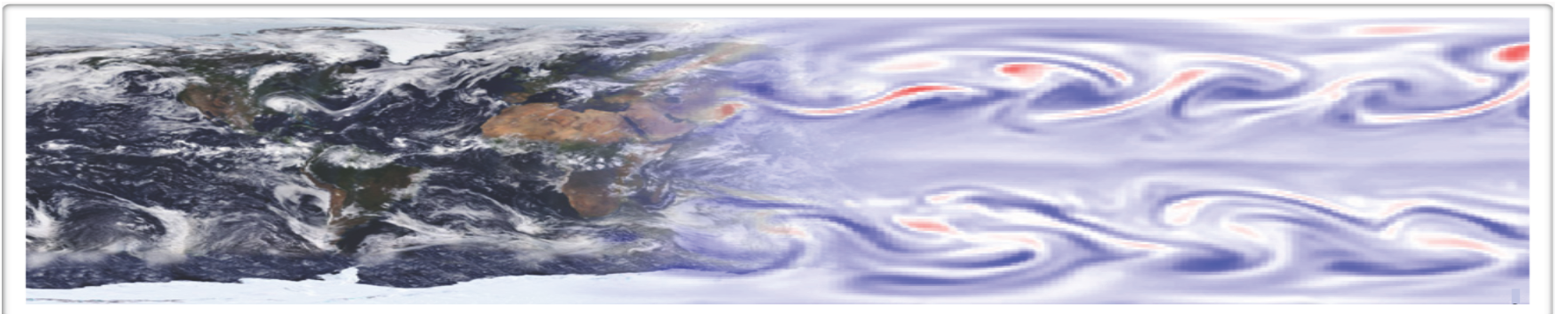
The research network (GDR) Theoretical Challenges for Climate Sciences (Theory & Climate) brings together the community of theorists in physics, climatology, atmospheric sciences, mathematics, computer science, and numerical sciences, particularly machine learning, who work on climate sciences. Its goal is to develop innovative theoretical and numerical tools to overcome current scientific limitations. Approaches from statistical physics, turbulence modeling, mathematics, and machine learning will make it possible to deepen the understanding of fundamental mechanisms, improve models, and better predict extreme climate events in order to reduce uncertainties regarding the impacts of climate change. This GDR has a strong interdisciplinary focus and involves scientists from several institutes of the CNRS, many other French organisations, and companies.