


Integrating Environmental Issues into Physics Research
06 février 2026
CNRS Physics works to reduce the environmental impact of research through the implementation of CNRS’s low-carbon transition plan at the scale of physics laboratories. It strives to measure and reduce the environmental footprint of research activities and research support activities in physics. The institute promotes initiatives aimed at reducing the environmental impact of its affiliated units and raises awareness among their staff.
Mitigation action plans proposed by the laboratories
In order to adapt national guidelines to the specific features of physics and to identify concrete levers for action, four thematic working groups have been established:
- Purchasing & Maintenance
- Large-scale Instrumentation
- Research trip / travel
- Digital Technologies
Composed in particular of volunteer Environmental Transition representatives from CNRS Physics’s research units, these groups conduct their work through several collaborative sessions. Their shared mission is to take ownership of the Sustainable Development & Social Responsibility Master Plan, to examine how it can be implemented in light of the specific features of physics laboratories, to better characterize the environmental impacts of research activities, and to propose actions to be implemented to the Institute’s Directorate.
Recommendations from CNRS Physics’s foresight report
The CNRS Physics foresight report entitled “Physics towards 2030: Fundamental Research and Societal Impacts” are the outcome of a collective effort launched in spring 2022, involving more than 1,000 physicists. Physics is a fundamental science that requires long-term research and can lead to major discoveries capable of profoundly transforming our understanding of the world. It also offers solutions to the major challenges our society faces. The first part of this foresight report addresses emerging scientific themes, while the second focuses on major societal challenges highlighted by French and European public policies. A third part aims to highlight cross-cutting issues that concern all of physics, and sometimes go beyond it.
In this final part, the chapter entitled “Integrating Environmental Issues into Physics Research” examines the consequences of environmental crises on physics research over the next ten years and lists the measures required to integrate these new constraints while maintaining high-level research. It contains numerous observations that apply to research as a whole, and particularly to physics.
Examples of actions aimed at reducing environmental impact carried out by CNRS Physics’s laboratories
Physics laboratories are taking action at their own scale to mitigate their environmental footprint. CNRS Physics shares and highlights these initiatives to support their dissemination within the scientific community.

The Matosthèque: a tool for sharing scientific equipment within a laboratory
Developed at the Laboratoire interdisciplinaire de physique in Grenoble, the Matosthèque is a new digital tool designed to facilitate the sharing of equipment within laboratories.
https://www.inp.cnrs.fr/en/cnrsinfo/matostheque-tool-sharing-scientific-equipment-within-laboratory
« Les Jardins de la Physique 2.0 », a model of commitment in the service of science
The emblematic sites of the École de Physique des Houches and the Institut d’Études Scientifiques de Cargèse (IESC) have embarked on a deep transformation toward greater energy sobriety. These research and training sites combine scientific excellence with environmental ethics by promoting sustainable practices in research and in hosting scientific communities.
- Les Houches
- Energy and buildings: replacement of oil-fired boilers with pellet boilers, high-performance radiators, temperature monitoring. Projects include insulation, new joinery, and solar panels.
- Food: one vegetarian meal per day, organic and local products, elimination of coffee pods, regional suppliers.
- Mobility: remote work for staff living outside the village, electric-assisted bicycles and cargo bikes, optimization of taxi use.
- Biodiversity and waste: garden development, chickens for organic waste, managed mowing, elimination of chemical products, controlled nighttime lighting.
- IESC – Cargèse
- Bioclimatic building: optimized insulation, thermal inertia, natural ventilation, solar-powered heating and hot water.
- Sustainable catering: water fountains, elimination of plastic bottles, reusable tableware, vegetarian/vegan menus, reduction of food waste.
- Resource management: waste sorting, vermicomposting, recovery of rinse water and rainwater (planned), eco-friendly dry cleaning.
- Responsible mobility: fleet of electric vehicles and solar charging stations, ADEME EURO6+ certified coach operator, incentives to use trains on the mainland, partnerships with certified maritime and air transport companies.
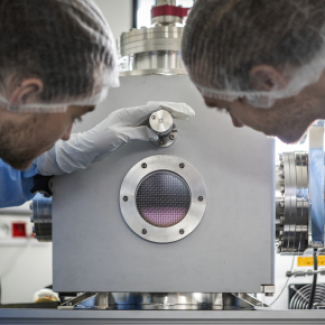
Clean rooms at the CNRS – combining cutting-edge research with a reduced carbon impact
The approach implemented at C2N illustrates how this laboratory strives to reduce the energy consumption of its clean rooms without compromising the quality of its research.
https://www.cnrs.fr/en/update/clean-rooms-cnrs-combining-cutting-edge-research-reduced-carbon-impact