

ERC Proof of Concept 2025 : 2 recipients at CNRS Physique
Valentina Emiliani and Laïla Perié were recipients of the ERC PoC 2025 in the first round.
https://www.inp.cnrs.fr/fr/cnrsinfo/erc-proof-concept-2025-2-laureates-cnrs-physique
The European Research Council (ERC) has just announced the second wave of projects that have been awarded a 2025 Proof of Concept grant. Sophie Carenco, a CNRS researcher at CINAM, and Thomas Salez, a CNRS researcher at LOMA, are the latest recipients of this grant, which rewards established scientists who are recognised in their field.
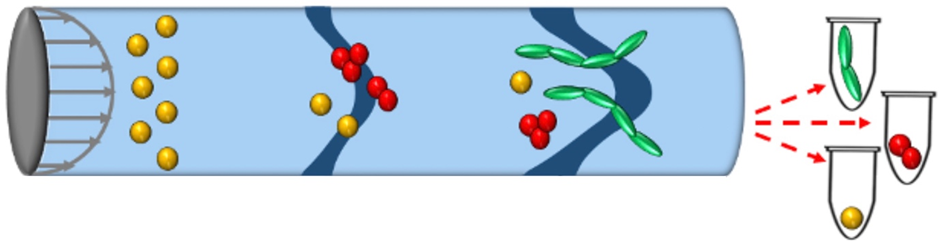
The characterisation of complex suspensions composed of microscopic entities is an essential task for control and purification processes in the water treatment, pharmaceutical, food and cosmetics industries. Existing methods for performing such tasks are often costly, low-throughput or high-volume, single-modal, based on external markers, with moderate resolution, and generally provide only partial information such as average particle size. By leveraging the fundamental knowledge acquired and methods developed as part of the EMetBrown project on microscopic transport in confinement, the BIFFTANNEN project aims to overcome the above limitations. The main objective is to develop and deploy an innovative and versatile bio-physico-chemical characterisation platform. It will uniquely combine state-of-the-art methods in microfluidics, imaging and deep learning, using absorption-based Taylor dispersion analysis, spectrometry and advanced statistical inference.
Thomas Salez is a CNRS senior researcher at the Laboratoire ondes et matière d’Aquitaine (LOMA, CNRS / Université de Bordeaux).
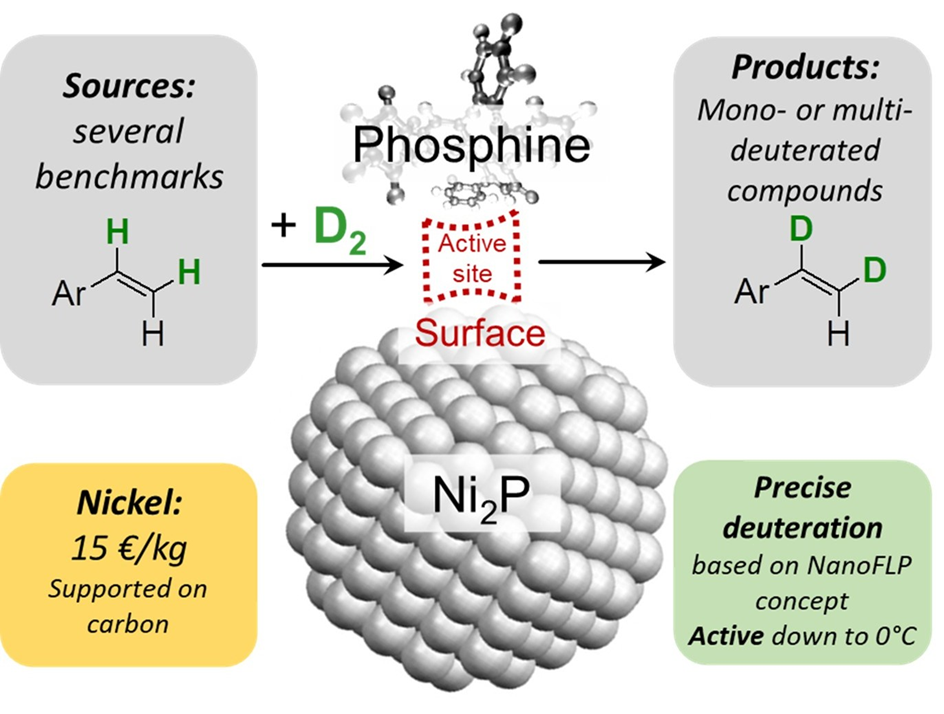
The PRELUDE project aims to develop a new catalyst for producing deuterated organic molecules, which are essential in medicines, metabolic tracers and OLED screens. Today, these molecules are expensive and difficult to synthesise, as their production relies on rare metals such as ruthenium and iridium, and highly selective processes.
What is innovative about PRELUDE? Using nickel phosphide (Ni₂P) nanoparticles, a material 100 times cheaper than current catalysts, combined with phosphines to guide the reaction with precision. This catalyst will enable deuterium (a hydrogen isotope) to be introduced at low temperatures (0°C) in a targeted and efficient manner into selected molecules.
The challenge is twofold: to reduce costs and improve selectivity in order to meet the needs of the pharmaceutical, medical diagnostics and high-tech materials industries. The market for deuterated compounds, estimated at €1 billion by 2033, could thus become more accessible and sustainable.
PRELUDE builds on the advances made in the ERC NanoFLP project, where Sophie Carenco demonstrated the effectiveness of these nanocatalysts for hydrogenation. With this new project, she is embarking on a key step: moving from the laboratory to a more mature technology..
Sophie Carenco is CNRS senior researcher at the Centre interdisciplinaire de nanoscience de Marseille (CINaM, Aix-Marseille Université / CNRS).