
Sharing data to make science more reliable
Data sharing helps to avoid unfounded claims regarding topological effects in condensed matter experiments.
References
Data sharing helps avoid “smoking gun” claims of topological milestones, S.M. Frolov, P. Zhang, B. Zhang, Y. Jiang, S. Byard, S.R. Mudi, J. Chen, A.-H. Chen, Moïra Hocevar, M. Gupta, C. Riggert, V.S. Pribiag, Science 391,137-142 - Published 8 January, 2026.
DOI: 10.1126/science.adk9181
Open access: HAL
The social and behavioural sciences are generally at the centre of discussions surrounding what is known as the reproducibility crisis. But a recently published article sheds new light on the ongoing debate. It shows that in the natural sciences, reproducibility is essential. If an experiment leads to a new discovery – whether concerning living systems, star formation or the behaviour of subatomic particles – then these findings should hold true for anyone who repeats the experiment under similar conditions. But this is not always the case, as researchers from Neel Institute, the University of Pittsburgh and the University of Minnesota have found.
The present study was carried out in the following CNRS laboratory:
- Institut Néel (NEEL, CNRS)
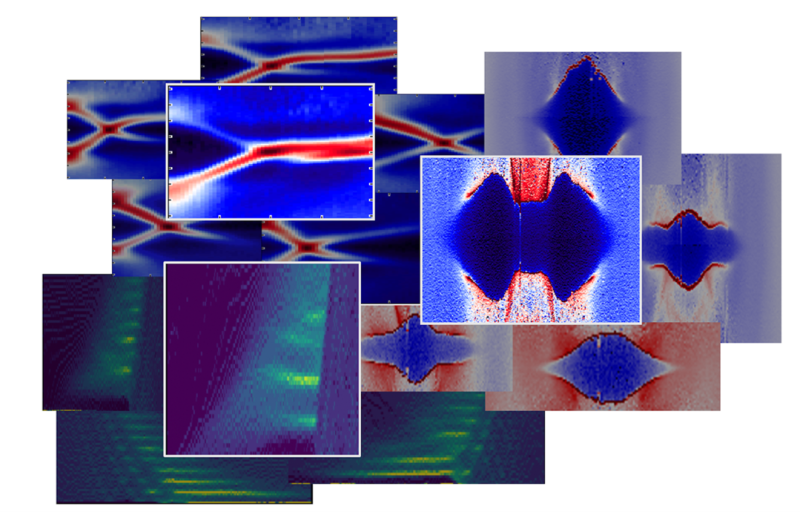
The article uses the example of topological effects in condensed matter physics to illustrate how signals that appear to unambiguously indicate significant discoveries may actually stem from other, more mundane sources. Analysing the topology of electronic bands—that is, the way in which the energy levels of electrons in solids are distributed according to energy and momentum—is a means of discovering conceptually new states of matter. Physicists are seeking these states because they could eliminate energy losses during charge transfer or preserve digital information for longer. But this new article shows that in reproducibility experiments, the seemingly irrefutable signatures of effects such as topological superconductivity turn out, upon closer inspection, to rest on different, more ordinary foundations. The paper proposes changes to the research and peer-review process that could increase the reliability of experimental results: sharing more data and openly discussing alternative explanations. It is published in the journal Science.