A research network to approach living systems by combining biology and physics

Corporate

To strengthen and promote connections between communities at the interface of biology and physics, the research network (GDR) "Quantitative Approaches to Living Systems" (AQV) was established in 2026. This GDR brings together nearly 400 scientists who tackle key biological questions by combining tools from both biology and physics.

A GDR to combine the tools of physics and biology

The creation of the GDR "Quantitative Approaches to Living Systems" (AQV) stems from a key observation: to better understand living systems, they must be quantified, modeled, and respect the laws of physics and chemistry that govern them. This approach can only succeed within an interdisciplinary framework. Beyond importing tools and concepts, it also involves addressing key questions in the study of living systems through approaches that blend biology and physics.

In return, these advancements drive the development of new physical concepts in fields such as active matter, non-equilibrium physics, robustness to noise, learning in frustrated systems, and the dynamics of ultra-high-dimensional systems.

The thematic areas of the GDR "Quantitative Approaches to Living Systems" (AQV)

  • Energy Conversion
    • Link between metabolism and mechanics at the cellular and tissue levels
    • Transfer of mechanical constraints and chemical energy across scales
    • Mechanochemical coupling and cytoskeletal self-assembly
    • Non-equilibrium modeling of molecular machines energy efficiency and molecular selectivity
  • Information Processing
    • Neural integration and information transfer, neural networks
    • Quantification of information transfer in gene and protein networks
    • Morphogens, differentiation and organ size regulation
  • Phase Transitions and Emergence
    • Phase transitions and liquid/solid dynamics of biological condensates. Dynamic stress response. Molecular self-organization
    • Active matter and gels. Phases and topological defects in biological tissues.
    • Collective decision-making and group strategies in organism assemblies
  • Evolution, Adaptation, and Learning
    • Learning in neural networks and the immune system
    • Evolution and co-evolution of protein networks
    • Ecology and statistical physics modeling of trophic systems
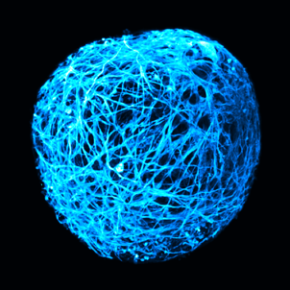
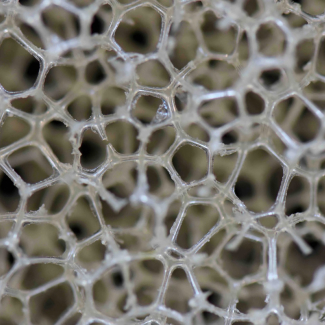
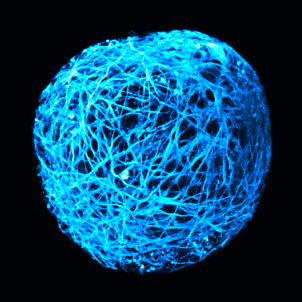
Image resulting from research by scientists from the AQV research network.
Image resulting from research by scientists from the AQV research network.© Léana Lengagne (IJM)

Addressing key biological themes through the tools of physics

The AQV research network strengthens and promotes connections between communities at the interface of biology and physics to explore key questions in biology. Each of these questions about biological systems potentially requires mobilizing a very broad spectrum of expertise: biology, theoretical and experimental physics, engineering, and chemistry.

Neurophysics aims to understand the brain and nervous system using tools and concepts from physics. This includes studying the electrical activity of neurons, the dynamics of neural networks, and the physical mechanisms underlying sensory perception and behavior. Scientists who investigate brain functions, neural circuits, and the development of new neurotechnologies fall under this axis of the AQV research network.

Immunobiophysics focuses on studying the physical processes governing the immune system. Immune responses result from complex interactions occurring at various temporal and spatial scales, from single molecules to exchanges between an immune cell and its microenvironment. This field notably includes the study of mechanisms of migration and interaction of immune cells within tissues, the impact of mechanical forces on their functions, and the physical principles involved in pathogen recognition.

One axis of the AQV research network explores ecological and evolutionary processes, such as population dynamics, species interactions, disease spread, and the impact of environmental changes on biodiversity. Researchers in this field use mathematical modeling, statistical analysis, and experimental approaches to study these complex systems.
 

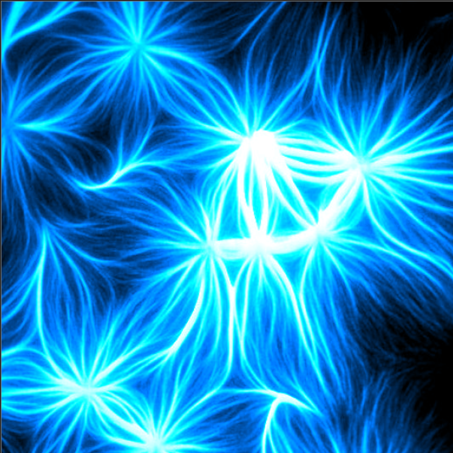
Image resulting from research by scientists from the AQV research network.
Image resulting from research by scientists from the AQV research network.© Nicolas Desprat (LPENS)

Living systems, at all scales, acquire, process, exchange, and exploit information to organize themselves and interact with their environment and peers. Biological information, whether genetic, biochemical, mechanical, sensory, or behavioral, lies at the heart of the dynamics of life and underpins diverse processes such as adaptation, learning, and evolution. One axis of the AQV research network focuses on how biological systems, from the cellular level to animal groups, acquire process and exploit information to guide their organization, behaviors, and interactions. At the core of this approach are fundamental questions about the nature of biological information: how it is encoded, transmitted, and decoded, as well as its implications for the robustness and plasticity of living systems.

Another axis of the AQV research network centers aims to integrate artificial intelligence as a tool for discovery and modeling at the very heart of biological systems. While automated image and omics data analysis is now commonplace, the challenge is to go further by developing approaches that account for the structured, dynamic, and multi-scale complexity of living systems, leveraging the latest artificial neural network architectures.

Synthetic and systems biology focuses on the design and engineering of biological systems with new functions. This field relies heavily on quantitative approaches, including mathematical modeling, computational analysis, and high-throughput experimental techniques. This theme involves scientists interested in engineering new biological systems for applications in medicine, biotechnology, and bioremediation.


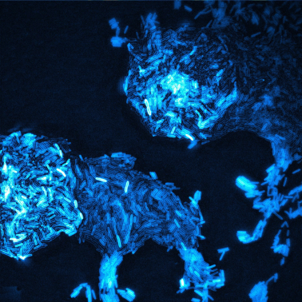
Image resulting from research by scientists from the AQV research network.
Image resulting from research by scientists from the AQV research network.© Gaelle Recher (LP2N)

AQV research network coordinator

Coordinator : Fabien MONTEL, CNRS researcher at the Laboratoire de physique de l'ENS de Lyon (LPENSL, CNRS / ENS de Lyon) - fabien.montel@ens-lyon.fr

Contact

Florent Calvo
Délégué scientifique