

The winners of 2025 ERC Synergy Grants from the CNRS
Find all the CNRS winning projects on its website.
https://www.cnrs.fr/en/update/winners-2025-erc-synergy-grants-cnrs
The European Research Council (ERC) has just announced the list of projects that have been awarded a Synergy grant. Scientists from laboratories affiliated with CNRS Physics are involved in five of these projects. Find out more about the projects below.
With a duration of six years and a maximum amount of €10 million, ERC Synergy Grants are designed to encourage collaboration between outstanding researchers, enabling them to pool their expertise, knowledge, and resources in order to push the boundaries of scientific discovery. This funding is part of the EU's Horizon Europe research and innovation program.
Vertebrates, like us, use adaptive immune cells to protect themselves from pathogens. Predicting mutations in these pathogens, as well as the immune response, is essential for designing vaccines and therapies. CoEvolve will map the coevolution of immune repertoires and viral populations to predict the likely properties of future infectious strains and design interventions that improve immune control.
Many efforts have been devoted to the evolution of viral pathogens, but most studies focus either on viral evolution or on immune adaptation in individual hosts. However, pathogen and host dynamics are coupled: viruses evade immune recognition, while the immune system adapts to changing viruses. CoEvolve takes an integrative approach: we will study host immune evolution and viral evolution jointly and on an equal footing.
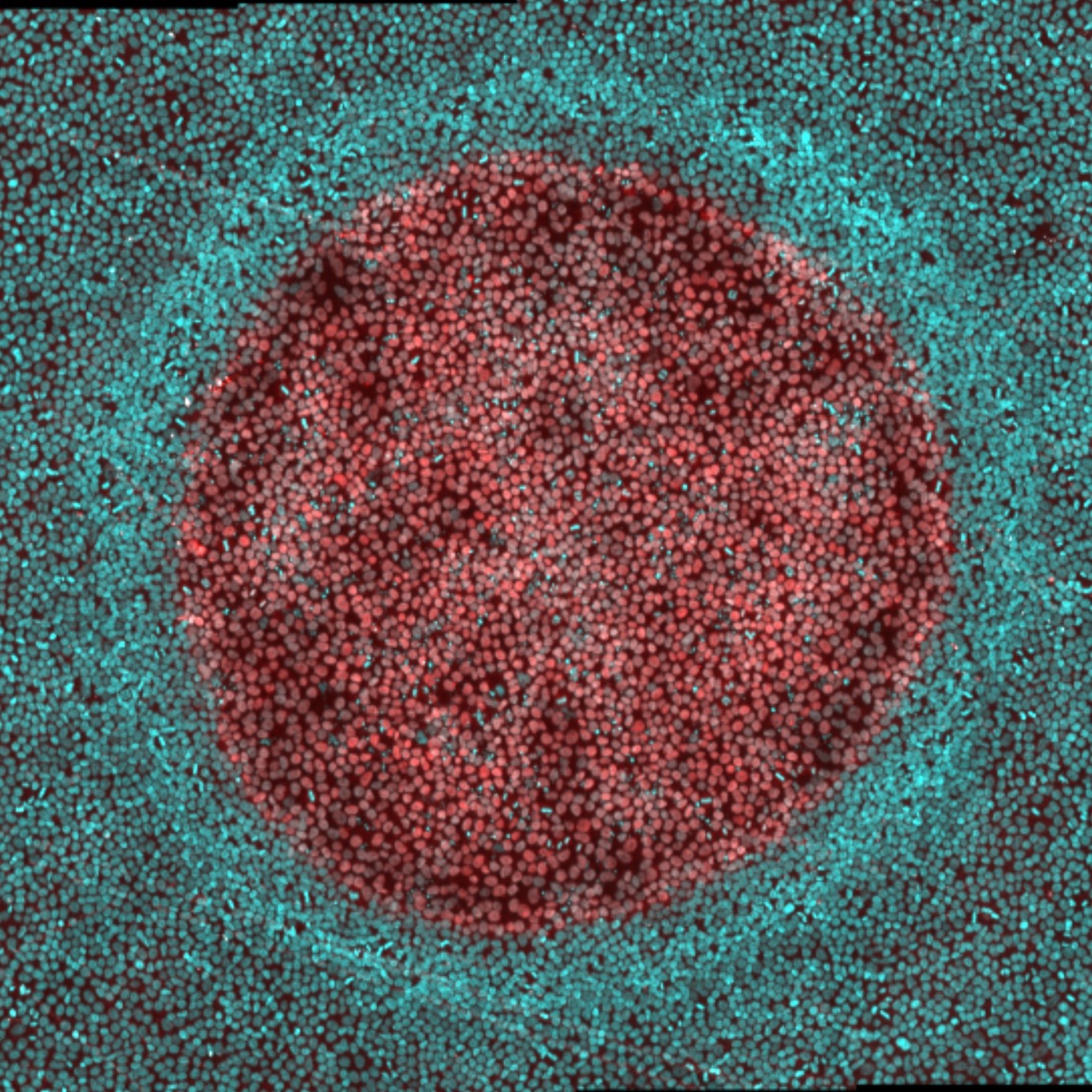
The PathCorg project focuses on the formation of the cerebral cortex, the seat of higher cognitive functions, by reproducing its development using three-dimensional in vitro models called organoids. The goal is to understand how different areas of the cortex develop and how neurons organize themselves into functional layers, processes that are essential to the emergence of brain functions and are altered in many neurological diseases.
To achieve this, the consortium will develop new microfluidic devices, miniaturized systems that allow precise control of fluid flows on a very small scale. These tools will make it possible to recreate in the laboratory the physical and chemical conditions that guide the regionalization and organization of the cortex during embryonic development. The ambition is also to improve the fidelity of organoids in order to better reproduce the organization of the human brain and offer a more precise tool for studying brain development and its dysregulation.
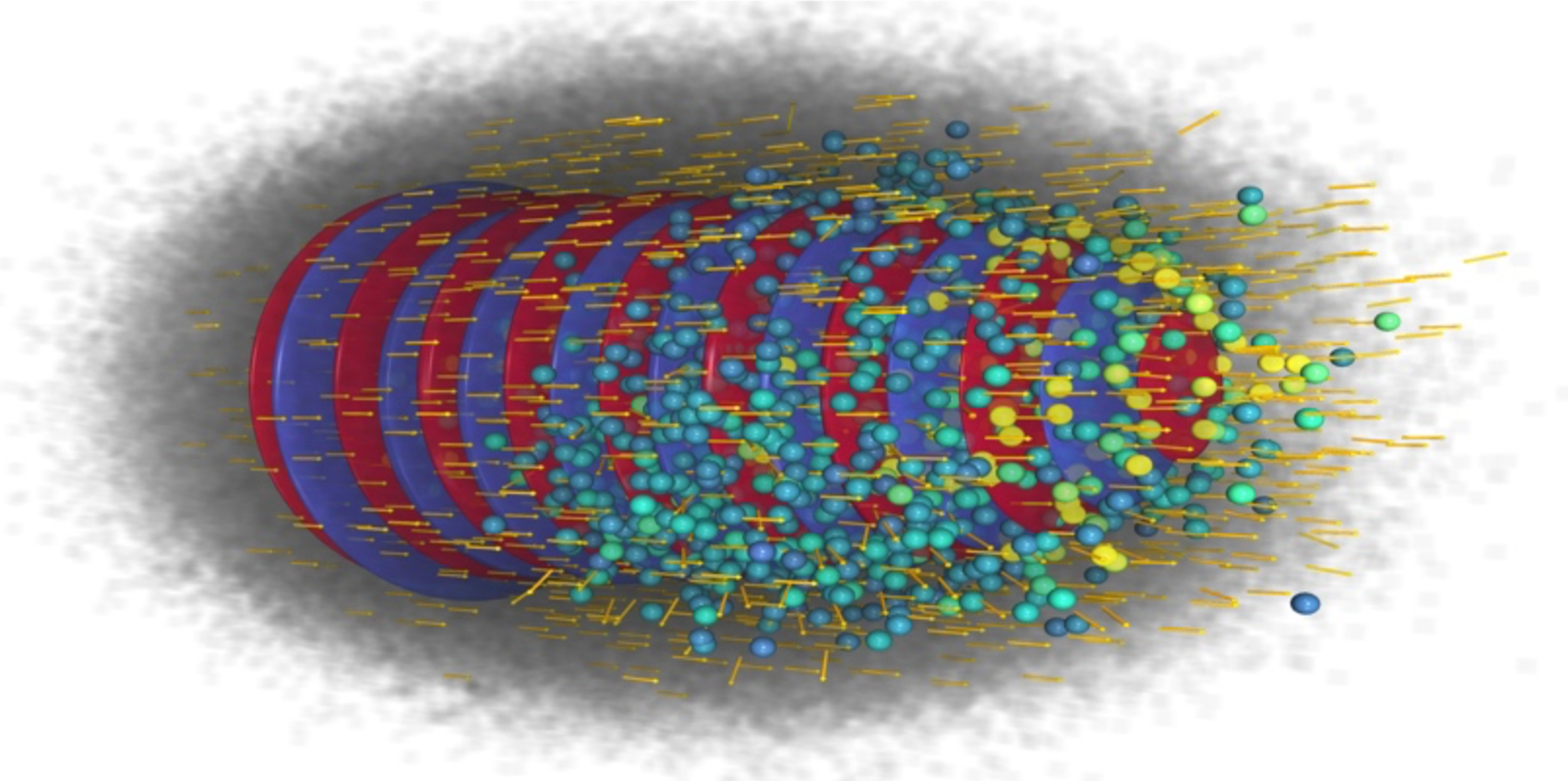
The NP-QED project is an international collaboration between the DESY laboratory in Germany, the LIDYL laboratories at CEA Saclay, and the Laboratory of Applied Optics (LOA, CNRS/ENSTA/École Polytechnique) in France.
It aims to test the predictions of Quantum Electrodynamics (QED) in two extreme regimes that have not yet been explored. The strong field regime, reached when the light amplitude exceeds the vacuum breakdown threshold (Schwinger field, ~10¹⁸ V/m), for which an intense light beam should create electron-positron pairs from the vacuum. The totally non-perturbative regime of QED, which exceeds the Schwinger field by three orders of magnitude, where no theory currently exists.
The project consists of conducting collision experiments between a relativistic electron beam and a laser pulse amplified by a plasma mirror. Conducted on multi-petawatt facilities, these unprecedented experiments will validate QED predictions and develop new theoretical frameworks for the non-perturbative regime.
The UltimatePV – Ultimate Photovoltaics project aims to rethink the modern solar cell and develop a new generation of photovoltaic technologies that are more resource-efficient and offer higher conversion efficiencies.
The use of photonic structures should significantly improve light absorption in solar cells and reduce material consumption tenfold. In the ultra-thin solar cells thus created, the concentration of charge carriers increases considerably. The use of energy-selective contacts will allow them to be extracted before they lose some of their energy through thermalization. In the future, these new solar cells could achieve efficiencies well above those of current technology and contribute significantly to accelerating the energy transition.
The French team working on the UltiMatePV project consists of Stéphane Collin and Amaury Delamarre at the Center for Nanoscience and Nanotechnology, and Jean-François Guillemoles and Daniel Suchet at the Île-de-France Photovoltaic Institute (IPVF, Chimie ParisTech - PSL/CNRS/École polytechnique/IPVF). It is associated with the teams of Stefan Glunz (University of Freiburg and Fraunhofer ISE, Germany) and Christophe Ballif (EPFL/CSEM, Switzerland).
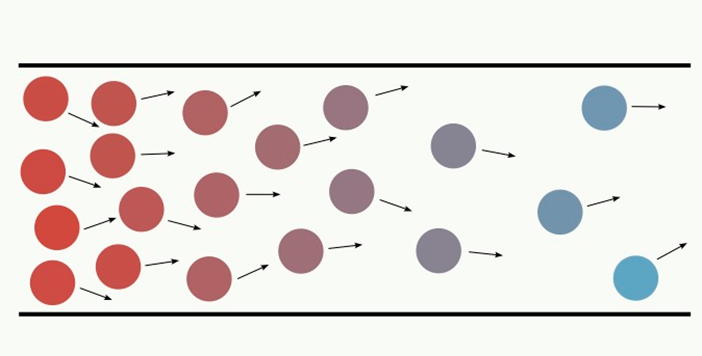
The UniCIPS project aims to discover a universal law describing the behavior of interacting particle systems when they are out of equilibrium, i.e., when they continuously exchange matter or energy with their environment. These systems, although ubiquitous, remain poorly understood today. UniCIPS researchers use simple models, such as the symmetric exclusion process (SEP), to explore the fundamental mechanisms of transport and correlations between particles. They have recently made a breakthrough, revealing a compact, closed equation for SEP that describes these correlations, radically simplifying a previously intractable problem. The project aims to extend this discovery to all systems, whether diffusive, ballistic, or higher-dimensional, in order to establish a unified theoretical framework for non-equilibrium physics. Led by an international team combining expertise in statistical physics, integrability, and hydrodynamics, UniCIPS could transform our understanding of collective transport and open up new perspectives for the science of complex systems.
It is associated with the teams of Stefan Glunz (University of Freiburg and Fraunhofer ISE, Germany) and Christophe Ballif (EPFL/CSEM, Switzerland).